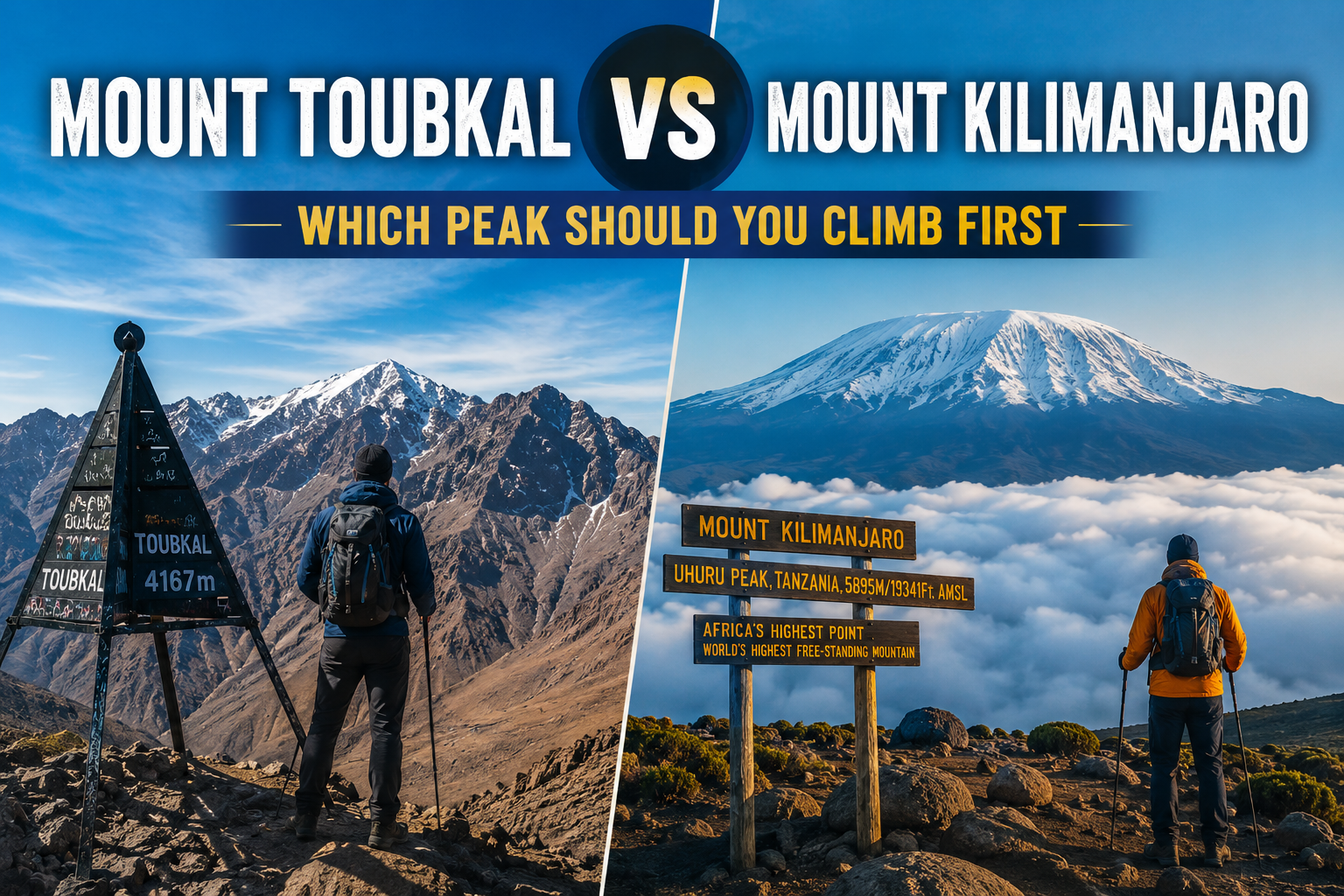
Trekking in the Atlas Mountains, Morocco: The Complete Guide
Few mountain ranges on Earth offer the same blend of dramatic scenery, living Berber culture, and year-round accessibility as the Atlas Mountains of Morocco. Stretching for over 2,500 km across Morocco, Algeria, and Tunisia, the Atlas range’s Moroccan section — and in particular the High Atlas, home to Mount Toubkal, North Africa’s highest peak — has become one of the world’s most rewarding trekking destinations. Whether you have a single free day in Marrakech or two weeks to spare, there is a route through these mountains built for you.
At Toubkal Treks, we’ve spent years guiding travelers through these valleys, passes, and summits. This guide brings together everything you need to know before lacing up your boots.
Why Trek the Atlas Mountains?
The High Atlas rises abruptly just an hour from Marrakech, which means you can go from the buzz of the medina to snow-capped 4,000m peaks in the same afternoon. A few things make this range genuinely special:
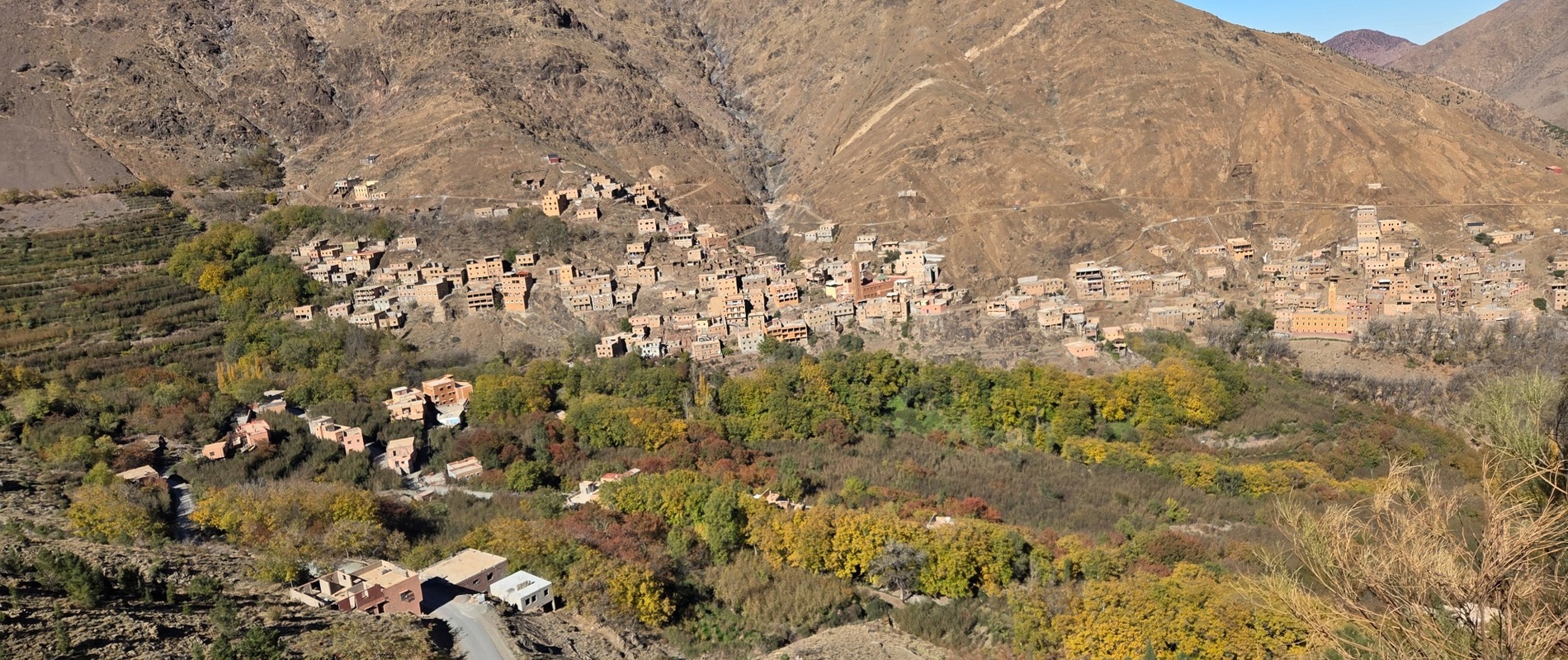
- Dramatic, varied landscapes — from the red-mud kasbahs and terraced barley fields of the Imlil Valley to the barren, scree-covered summit ridge of Toubkal itself.
- Authentic Berber culture — the High Atlas is home to Amazigh (Berber) communities who have farmed and shepherded these valleys for centuries. Trekking here means overnighting in mountain villages, eating tagines cooked by local families, and walking trails still used daily by muleteers.
- A genuine high-altitude challenge close to Europe — Mount Toubkal (4,167m) is one of the most accessible 4,000m+ summits in the world, climbable by reasonably fit hikers without technical climbing experience (outside winter).
- Year-round trekking — lower valley routes are walkable in every season, while Toubkal itself can be climbed on foot from roughly April to October and with crampons and ice axe in winter.
The Best Treks in the Atlas Mountains
1. Climbing Mount Toubkal
The classic objective. Most itineraries follow the same broad shape: drive from Marrakech to the trailhead village of Imlil, walk up through the Mizane Valley via Sidi Chamharouch to the Toubkal Refuge (around 3,207m), then make a pre-dawn push for the summit before descending the same day.
- 2-Day Climb Mount Toubkal ascent trek — the fastest way to stand on North Africa’s roof, ideal for travelers short on time.
- Toubkal Express 3 Days 2 Nights — a slightly more relaxed pace with an extra acclimatization night.
- 3 Days Toubkal Climb Winter Edition — for those wanting the snow-and-ice version of the climb, guided by mountain professionals equipped for winter conditions.
- Complete Mt Toubkal Circuit Trek – 8 Days — a full loop around the massif for trekkers who want the summit plus the wider valleys and villages around it.
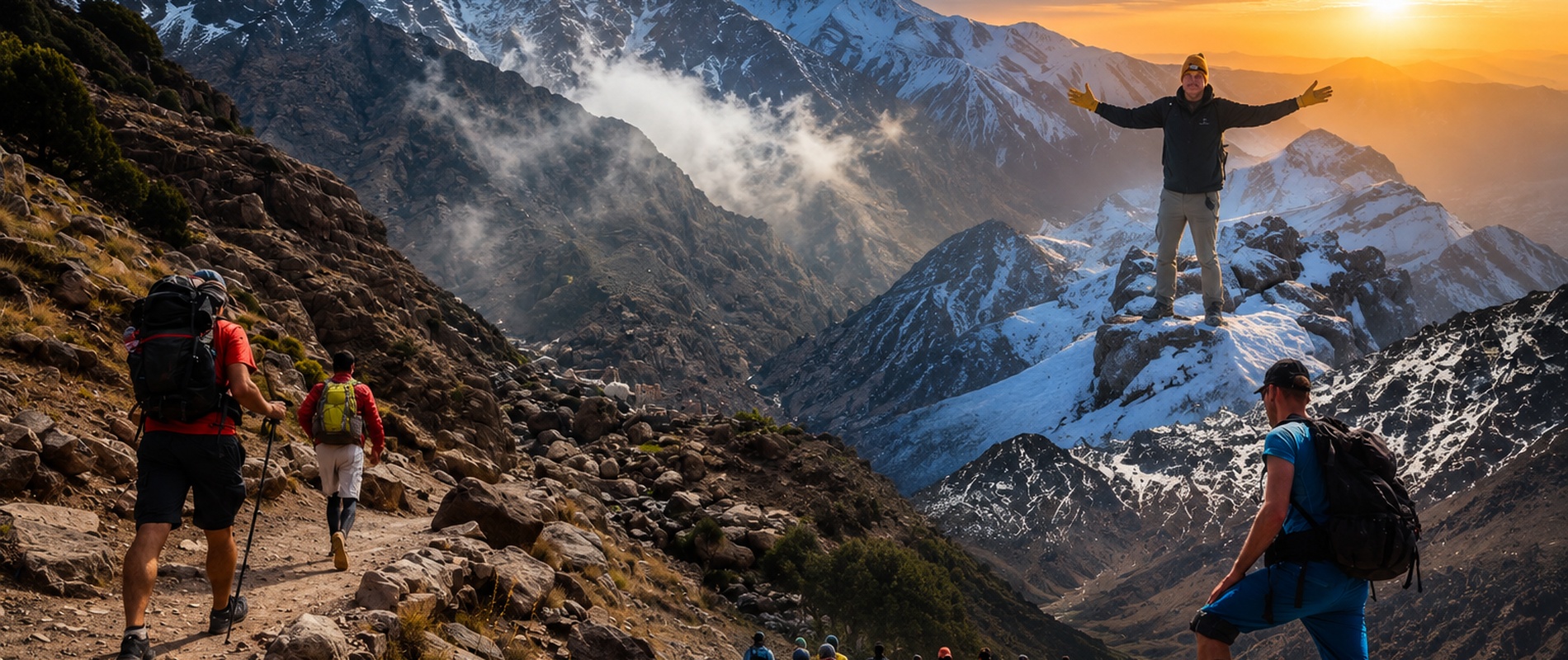
2. Valleys, Villages, and Passes
Not every trek in the Atlas needs to end on a summit. Some of the most memorable days here are spent walking between mud-brick villages, over walnut-shaded irrigation channels, and across passes (tizis) with sweeping views back toward the plains.
- Trekking the Atlas Mountains 3 Days — a well-rounded introduction to valley trekking without the altitude demands of Toubkal.
- 4 Day Trek through Mountains, Berber Villages and Lush Valleys — deeper into rural life, staying in traditional gîtes along the way.
- Atlas Panorama Trek – 4 Days Through Berber Valleys & High Passes — built around some of the range’s most photogenic viewpoints.
- Luxurious Lodge-to-Lodge Trek through the Atlas Mountains – 4 Days — the same spectacular terrain, with comfortable eco-lodges instead of basic refuges each night.
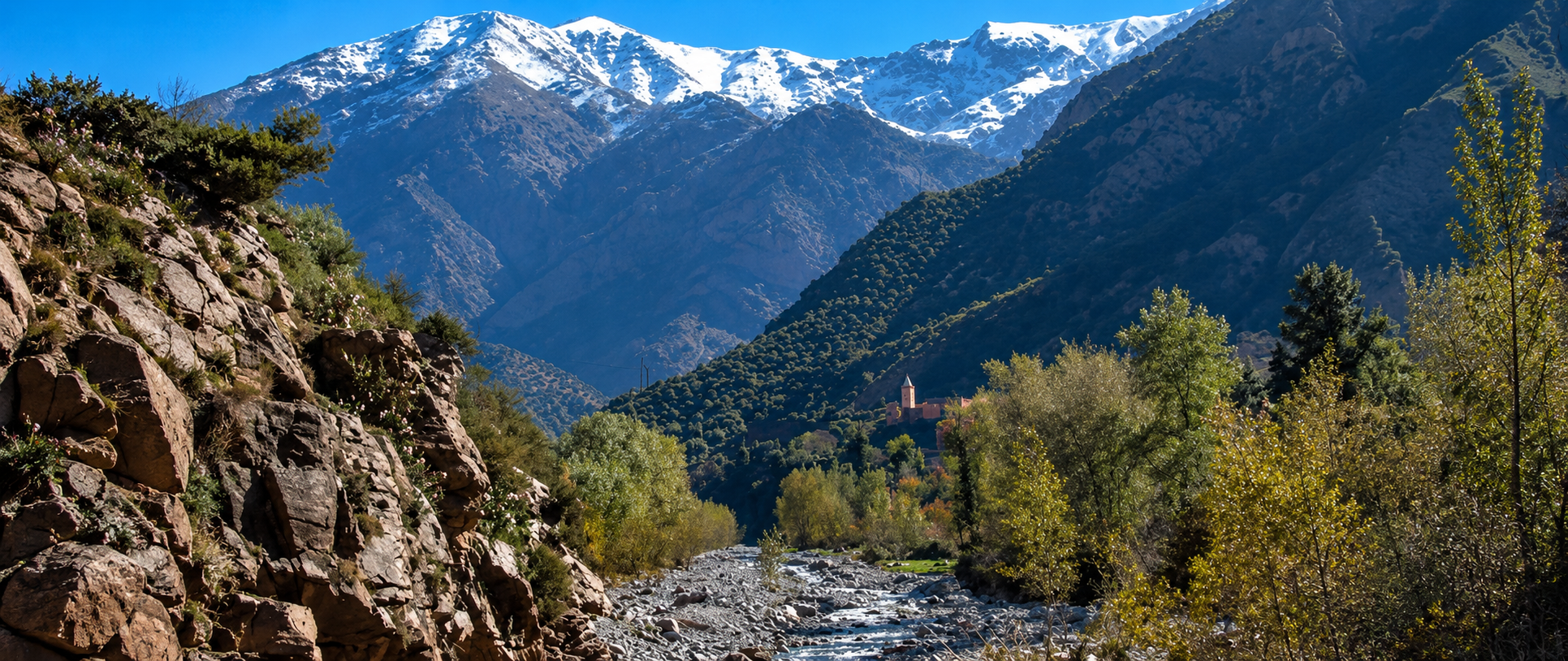
3. Combined Adventures: Mountains, Desert, and Beyond
For travelers who want the full spectrum of Morocco’s landscapes in one trip, several itineraries link the High Atlas with the Sahara or with Marrakech’s cultural highlights.
- 5-Day Marrakech Toubkal Summit and Sahara Adventure — summit Toubkal, then trade snow for sand dunes.
- 5-Day Combined Trek: Atlas Mountains and Sahara Desert — mountain trails followed by a camel trek and desert camp.
- 7 Days: Conquer Mt Toubkal and Explore the Magic of Morocco — a comprehensive week combining the summit with wider exploration.
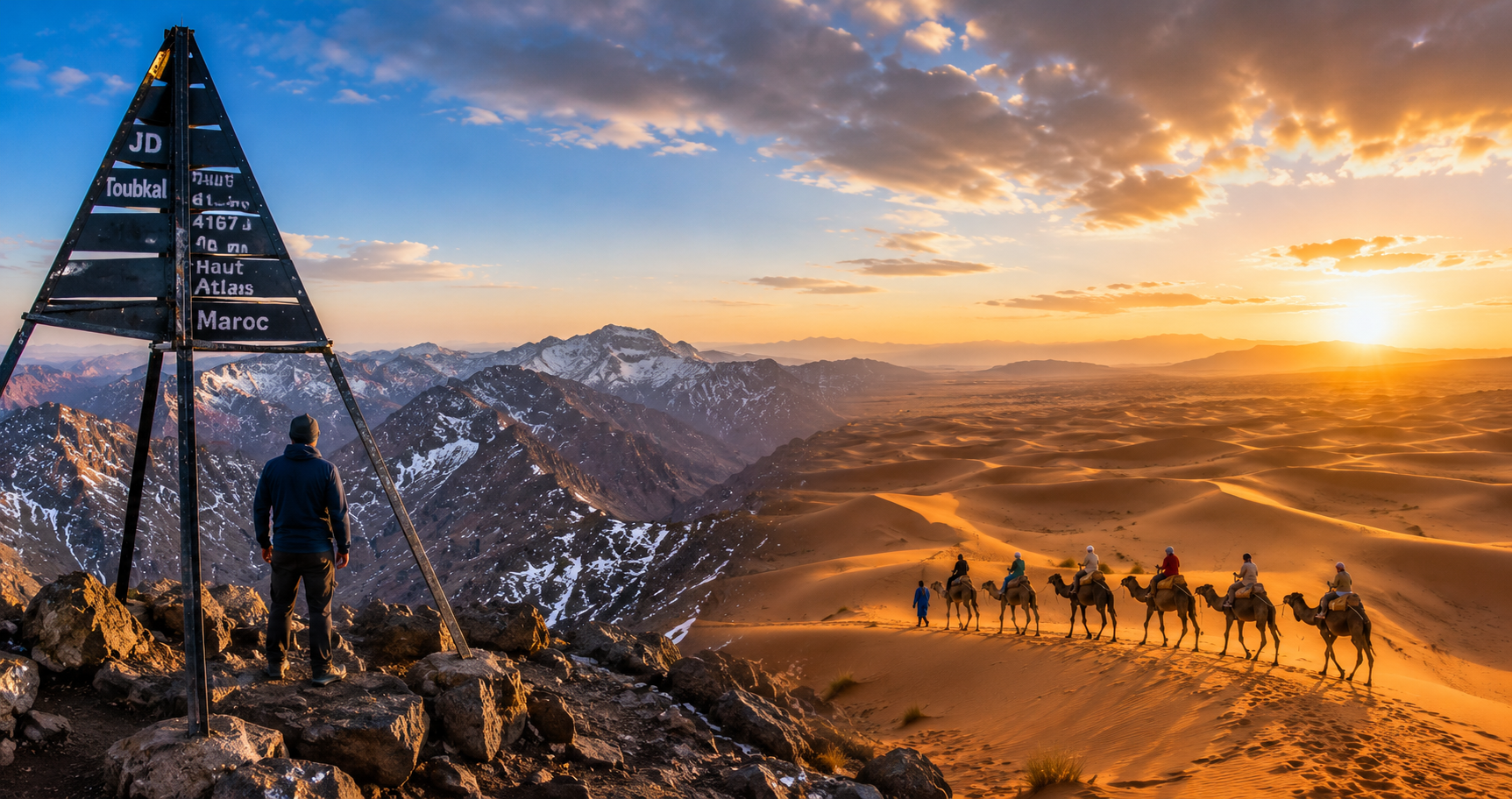
4. Short on Time? Day Trips and Overnights
If you’re based in Marrakech and only have limited time, the Atlas Mountains are close enough for a genuinely satisfying taste of high-altitude trekking without an overnight commitment.
- Epic Day Hike from Marrakech to the Atlas Mountains
- Atlas Mountains Day Hike to Sidi Chamharouch with Picnic Lunch
- Atlas Mountains Day Hike to Tizi Mzik Pass and Imlil Waterfalls
- 2 Days Walking and Hiking in the High Atlas Mountains — for a one-night escape into the mountains.
Browse the full range on our Atlas Mountains tour page or our Mount Toubkal tour page.
When to Go
| Season | Conditions | Best For |
|---|---|---|
| Spring (Apr–Jun) | Wildflowers, melting snow, mild temperatures | Toubkal ascents, valley treks |
| Summer (Jul–Aug) | Hot in the valleys, cool at altitude | Early starts, high-altitude routes |
| Autumn (Sep–Oct) | Clear skies, stable weather, harvest season in the villages | Widely considered the best all-round window |
| Winter (Nov–Mar) | Snow and ice above ~3,000m | Winter mountaineering with crampons and ice axe, guided ski touring |
If you’re set on a winter ascent, take a look at our dedicated 3 Days Toubkal Climb Winter Edition, which is led by guides experienced in winter mountain conditions.
What to Expect on the Trail
Fitness level: Most valley and village treks are suitable for anyone with a reasonable level of fitness and some hiking experience. Climbing Mount Toubkal is more demanding — not technically difficult in summer conditions, but a genuine full-day effort at altitude, with a long, sustained final push to the summit.
Accommodation: Depending on your itinerary, nights are spent in mountain refuges, family-run gîtes, or — on our lodge-to-lodge routes — comfortable eco-lodges with hot showers and home-cooked meals.
Guides and mules: All our treks are led by licensed local mountain guides, with mules used to carry gear on multi-day routes so you can walk unencumbered.
Packing essentials: Sturdy, broken-in hiking boots, layered clothing (temperatures swing significantly between valley and summit), a warm hat and gloves even in summer, sun protection, a refillable water bottle, and — for Toubkal specifically — a headlamp for the pre-dawn summit push.
Planning Your Trekking in the Atlas Mountains Morocco
Every itinerary above can be tailored to your fitness level, schedule, and interests. If you’re not sure which route fits you best, our team is happy to help you choose — get in touch through our Contact page, or learn more about who we are and how we work on the About Us page.
Ready to start planning? Explore the full collection of Atlas Mountains treks, browse our Mount Toubkal climbing itineraries, or head straight to our homepage to see everything Toubkal Treks has to offer — from day hikes to combined mountain-and-desert expeditions.
The Atlas Mountains have a way of staying with you long after you’ve left them — the silence of the high passes, the smell of woodsmoke in a village gîte, the view from the summit at sunrise. However much time you have, there’s a trail here for you.