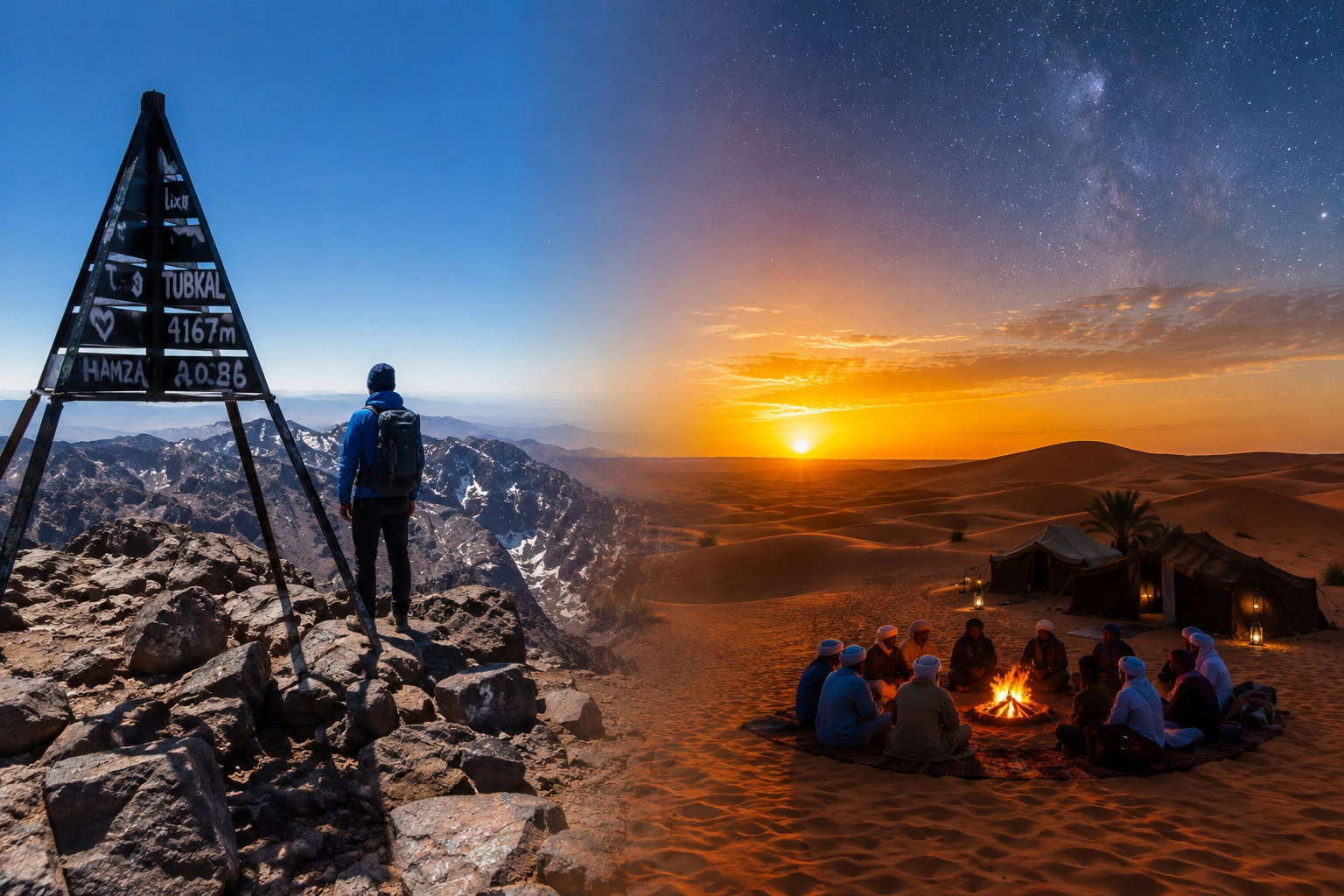
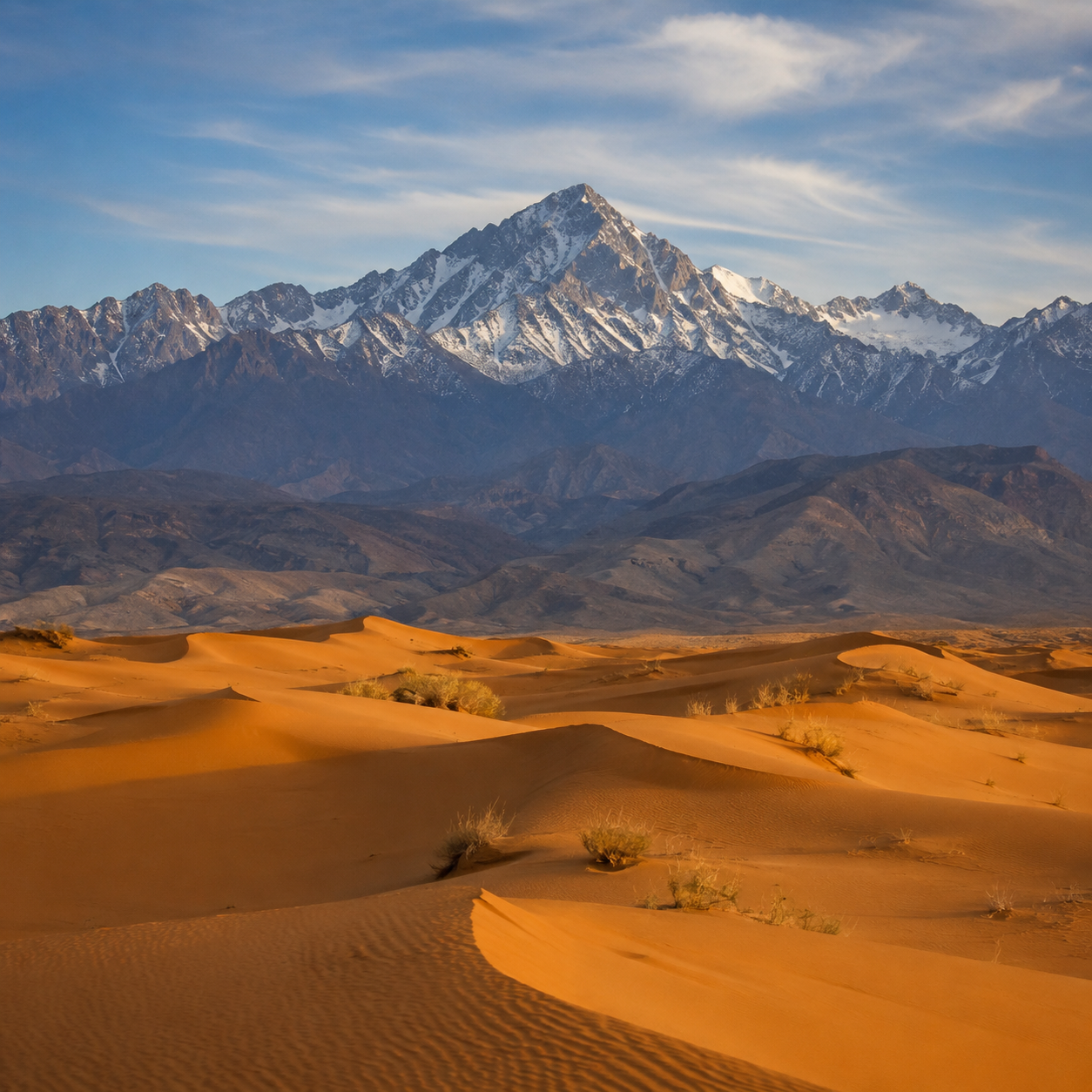
There are trips, and then there are journeys that take you from one extreme of a country to the other. This 6-Day Mount Toubkal Ascent and Sahara Desert Adventure does exactly that: it carries you from the thin, cold air atop Mount Toubkal (4,167m) — the highest summit in North Africa — down through Berber valleys, ancient kasbahs, and dramatic gorges, all the way to the shifting golden dunes of the Sahara Desert at Merzouga.
Starting in Imlil, the trekking capital of the High Atlas, you’ll spend three days climbing through pine forests, high mountain passes, and scree slopes with a certified local mountain guide and muleteer support, sleeping in a Berber guesthouse and the historic Toubkal Refuge before standing on the roof of North Africa at sunrise. From there, the adventure shifts gear entirely: a scenic overland crossing of the Tizi n’Tichka pass, the fortified city of Ait Ben Haddou, the Valley of Roses, and the Todra and Dades Gorges lead you into the desert, where a sunset camel trek delivers you into the heart of Erg Chebbi for a night beneath the stars in a traditional nomad camp.
This is Morocco distilled into six days — mountains and desert, Berber culture and ancient trade routes, physical challenge and total stillness — designed for travelers who want more than a checklist of sights and are ready for a genuine adventure.
Drive: Marrakech → Imlil, 65 km / approx. 1h30
Walk: Imlil (1,740m) → Tizi Mzik pass (2,489m) → Azib Tamsoult (approx. 2,300m), approx. 5–6 hours, +749m elevation gain to the pass
Overnight: Azib Tamsoult Refuge, mountain gîte, half-board
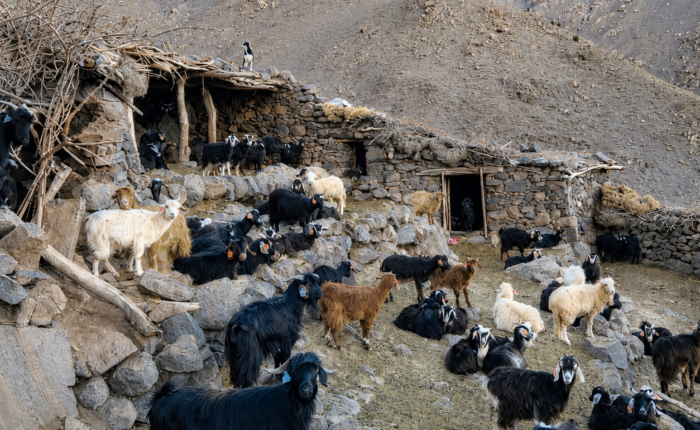
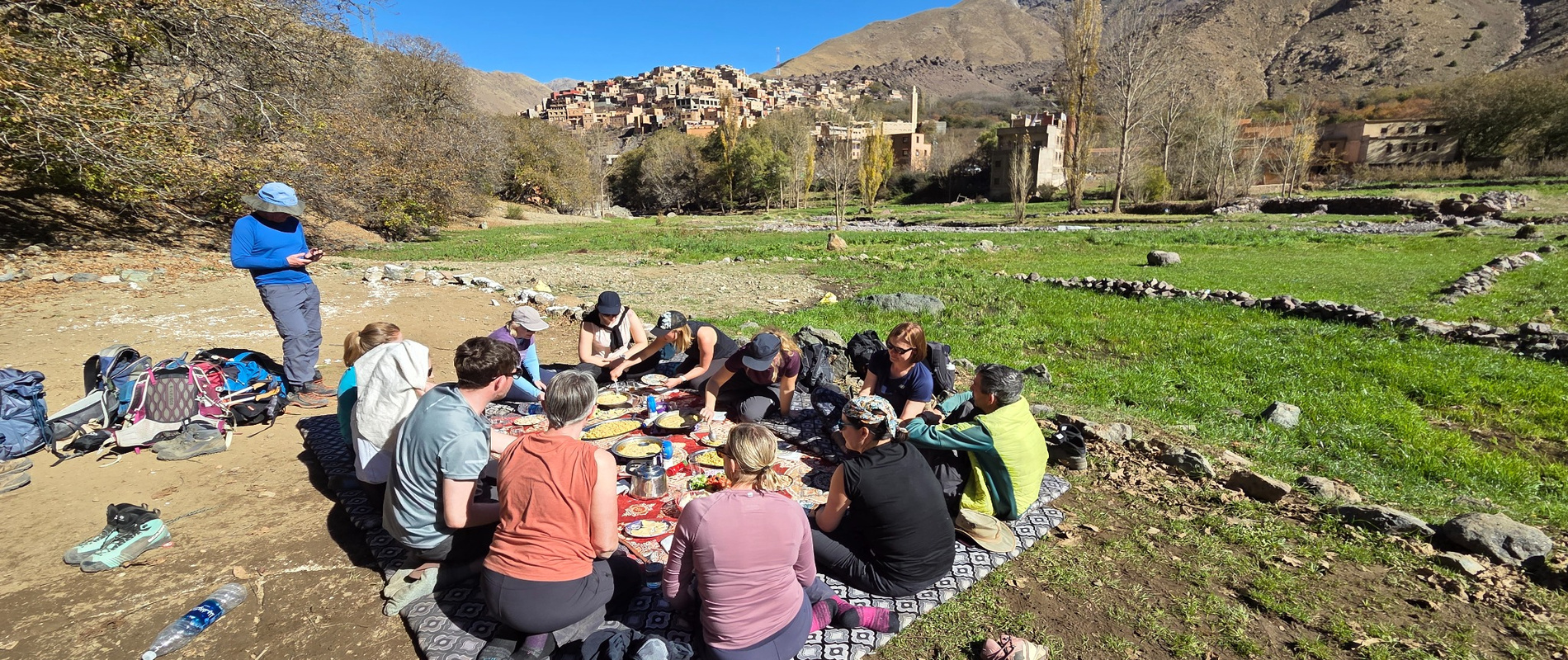
Your guide meets you in Marrakech for the drive south into the High Atlas foothills, arriving at Imlil (1,740m), gateway to the Toubkal massif. After a welcome mint tea and final kit check with your mountain guide and mule team, you set off on foot — but rather than following the standard Mizane Valley route, today’s trail climbs westward out of the Imlil basin toward the Tizi Mzik pass at 2,489m. It’s a sustained, steady climb through juniper scrub and open mountainside, with the ridge crossing offering wide views back over Imlil and out across the Toubkal range. From the pass, the trail descends into a quieter, less-trekked valley to reach Azib Tamsoult, a traditional shepherd’s refuge that makes for a peaceful first night away from the busier main trail.
Walk: approx. 5–6 hours, climbing from approx. 2,300m to the Tizi n’Aguelzim pass at 3,600m, then descending to Toubkal Refuge (3,207m)
Terrain: Steady mountain trail, high pass crossing, increasingly alpine and rocky underfoot
Overnight: Toubkal Refuge (Refuge du Toubkal / Neltner Hut), 3,207m, shared mountain hut
Today’s crossing is the toughest of the approach days: a long, steady climb out of the Azib Tamsoult valley up to the Tizi n’Aguelzim pass at 3,600m, the high point of the day and a major landmark on the route. Lunch is taken near the pass with sweeping panoramas over the surrounding peaks and valleys — one of the most scenic stops of the whole trek. From the pass, the trail drops down into the Toubkal massif’s south side, arriving at the Toubkal Refuge, a stone mountain hut at the foot of the summit pyramid that has sheltered climbers for generations. The rest of the afternoon is for resting, rehydrating, and briefing with your guide ahead of the early summit start.
Walk (ascent): approx. 4–5 hours, +960m elevation gain (3,207m → 4,167m)
Walk (descent): approx. 6–7 hours, down to Aremd, approx. 1,900m
Terrain: Scree fields, boulder sections, thinning air — the hardest and longest day of the trek
Overnight: Berber guesthouse, Aremd Village, half-board
An early, headlamp-lit start takes you up the South Cirque, across the stream above the refuge, and onto the long scree slope leading to the summit ridge — not technical, but physically demanding, especially in the thinner air above 3,800m. Reaching the top of Jbel Toubkal (4,167m), marked by its distinctive pyramid trig point, you’re rewarded with uninterrupted views across the entire High Atlas range and, on clear days, hints of the pre-Saharan plains far to the south. After time to take it all in, you’ll retrace the route back down to the refuge for a break, then continue the long descent all the way down to Aremd, a picturesque Berber village of stone houses terraced into the hillside just above Imlil. It’s a big day on tired legs, but arriving in Aremd — rather than pushing straight back to a city hotel — gives you one last authentic mountain night before the journey south.
Drive: approx. 8–9 hours total, including stops (Aremd → Tizi n’Tichka pass → Ait Ben Haddou → Ouarzazate → Dades Gorge, roughly 340 km)
Highlights en route: Tizi n’Tichka pass (2,260m), Ait Ben Haddou (UNESCO World Heritage kasbah), Ouarzazate, Skoura palm oasis, Valley of Roses
Overnight: Hotel/kasbah in Dades Gorge, half-board
This is the transition day — trekking boots away, and back into the vehicle for one of Morocco’s classic scenic drives. From Aremd, you’re transferred out to the main road and begin the climb over the Tizi n’Tichka pass, the highest major road crossing of the High Atlas, winding through switchbacks, red rock formations, and Berber villages clinging to the hillsides. A highlight stop at Ait Ben Haddou lets you wander the earthen ramparts of this still-inhabited, UNESCO-listed ksar, familiar from numerous film and television productions. Continuing past Ouarzazate — Morocco’s “Hollywood of the desert” — and through the palm groves of Skoura and the rose-farming valley of El Kelaa M’Gouna, you’ll arrive at the Dades Gorge as the cliffs turn gold in the late-afternoon light.
Drive: approx. 6–7 hours total (Dades → Tinghir/Todra Gorge → Erfoud → Merzouga, roughly 300 km)
Camel trek: approx. 1.5 hours at sunset into Erg Chebbi
Overnight: Traditional Berber desert camp, Erg Chebbi dunes
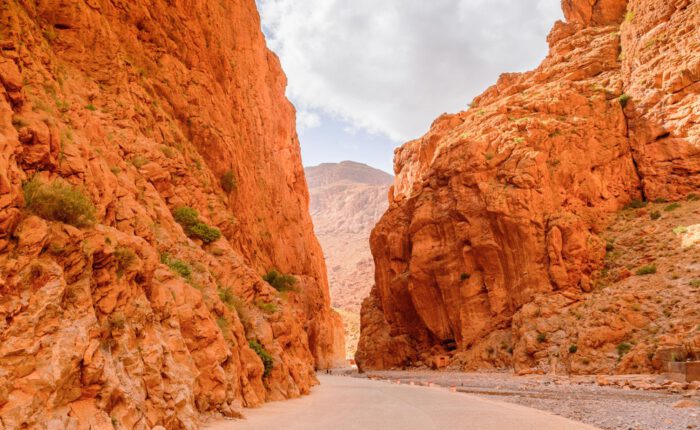
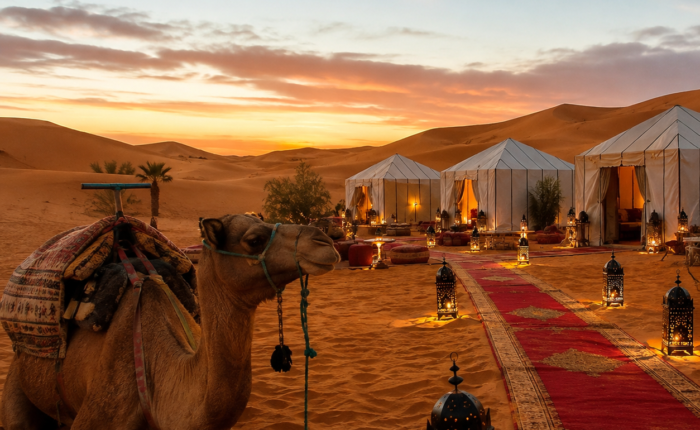
After breakfast, drive to the Todra Gorge, where sheer limestone walls rise up to 300m above a narrow river canyon — a short walk along the gorge floor is a highlight in itself. From there, the road runs south through Tinghir and Erfoud, the landscape flattening and drying out into hammada desert plains as you approach Merzouga. By late afternoon you’ll swap your vehicle for a camel, riding out across Erg Chebbi — Morocco’s highest dune field, with some dunes reaching 150m — as the sun sets and the sand turns from gold to deep orange to rose. Arrive at a private desert camp for a traditional Berber dinner, music around the fire, and one of the most complete night skies you’ll ever see.
Camel trek: approx. 1 hour back to Merzouga at sunrise
Drive: approx. 8–9 hours (Merzouga → Rissani → Draa Valley → Ouarzazate → Marrakech, via Tizi n’Tichka), roughly 560 km
Arrival: Marrakech, approx. 19:00–20:00
Rise early — this sunrise, watched from the top of a dune before the camp stirs, is worth the alarm. After breakfast, camels carry you back to Merzouga, where your vehicle is waiting for the long but scenic drive home. The route runs through Rissani, once a caravan trading hub, and along the palm-lined Draa Valley before climbing back over the Atlas via Ouarzazate and the Tizi n’Tichka pass. You’ll arrive back in Marrakech in the early evening, bringing a journey from 4,167m to sea-level sand dunes full circle.
This trek runs From May To October and can depart at any date of your preference.
We usually have several treks departing each week that you may join if you wish , please get in Touch!!
This trek is available to be booked independently (including transfers from Marrakech)
No technical climbing skills are required — Toubkal is a trekking peak, not a technical climb. However, it does demand a good level of fitness and stamina, since summit day involves 8–10 hours of walking at altitude over scree and boulder terrain.
The Toubkal Refuge sits at 3,207m and the summit at 4,167m, which is high enough that mild altitude symptoms (headache, fatigue) are possible. The itinerary is paced to allow gradual acclimatization, and your guide is trained to monitor the group throughout.
Yes. This trip is offered as a private tour, so departure dates are flexible and pacing can be adapted. The desert portion (Days 4–6) can also be booked as a standalone tour for travelers who prefer to skip the mountain trek.
Night 1 is at the Azib Tamsoult refuge, a simple mountain gîte with shared rooms. Night 2 is the Toubkal Refuge, a basic shared mountain hut with dormitory-style bunks. Night 3 is a comfortable Berber guesthouse in Aremd village. Night 4 is a hotel or kasbah-style riad in the Dades Gorge. Night 5 is a private tent in a Luxury desert camp with proper beds and, at most camps, en-suite facilities.
Build up your cardiovascular fitness and leg strength in the weeks before the trip — regular hill walking, stair climbing, or hiking with a loaded daypack is ideal preparation. Break in your hiking boots beforehand to avoid blisters on summit day.
Most of those equipment can be rented locally from our equipment shop in Imlil:
Mobile signal is generally available in Imlil and intermittently up to the refuge refuge do has Wifi, but expect no signal on summit day untill you come dow to Aremd Village where you will be acces to Wifi. In the desert, most fixed camps offer limited WiFi at a communal area, though signal in the dunes themselves is unreliable.
Find the trek you are interested in then contact us via E-mail to discuss your trek and check availability. Once the details of your trek (duration, route and number of people) have been agreed, we will make a provisional booking, giving the dates and cost.
To confirm your booking we ask you to pay a 20% deposit. This can be in Euros, pounds sterling or US dollars online via bank account. The balance is paid in Morocco by cash – again in Euros, sterling or dollars – at the beginning of the trek.
NB: if you can’t carry cash, you can always pay again the balance online by bank few days before departure.
+212.638.861.657
Contact@Toubkal-Treks.com
WhatsApp us