
Key takeaways
- You do not need to be an athlete to summit Toubkal, but you do need steady cardio and leg endurance built over about eight weeks.
- The CDC recommends climbing no more than 500 metres per sleeping altitude once you pass 3,000 metres, which is why the two-day Toubkal route helps your body adjust.
- Train with a loaded daypack on real hills so your legs, lungs, and shoulders are ready for the rocky terrain.
- Ankle strength matters: among injured mountain hikers in the Austrian Alps, the ankle was the most common injury site.
- Rest, sleep, and simple carbohydrate-focused meals in the final week do more for your summit than any last-minute hard workout.
To train for Mount Toubkal, build aerobic fitness and leg endurance over about eight weeks, then practise with a loaded daypack on real hills. You do not need to be an athlete and you do not need special altitude gear. At roughly 4,167 metres, Toubkal is the highest peak in North Africa, and the summit day is long and steep rather than technical. That means your fitness, not your climbing skill, decides how much you enjoy it.
This guide covers what actually matters: cardio and legs, a realistic plan for non-athletes, loaded hikes, ankle strength for the descent, simple altitude preparation, and recovery in the final week.
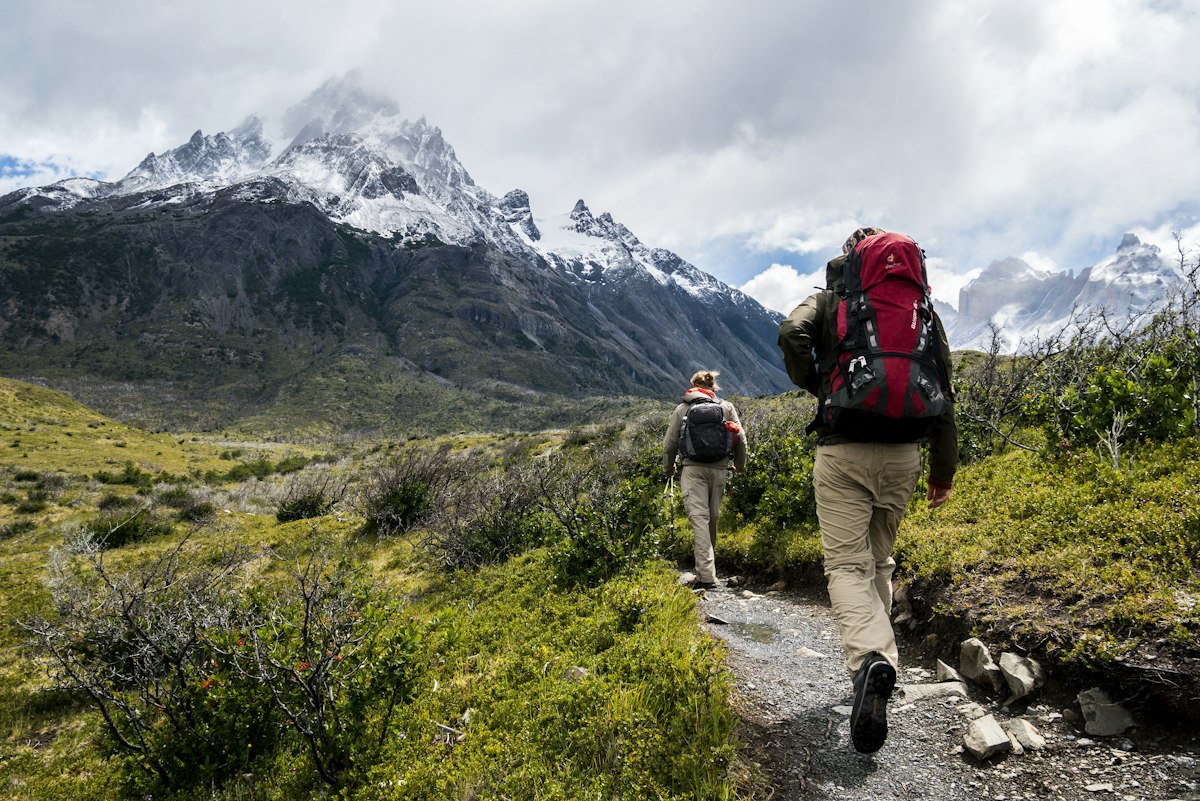
Why Cardio and Leg Endurance Matter Most
The Toubkal summit push is a sustained effort at altitude. You climb for several hours, gaining well over a thousand metres on summit day, often on loose rock. Nothing tests you more than keeping a steady pace uphill while your legs tire and the air thins.
Two systems carry you up:
- Aerobic fitness. Your heart and lungs deliver oxygen to working muscles. The better your aerobic base, the longer you can walk uphill without stopping to gasp, and the easier thin air feels.
- Leg endurance. Your quads, calves, and glutes do the lifting on the way up and absorb impact on the way down. Muscular endurance, not raw strength, keeps them working hour after hour.
Prioritise these two over everything else. Core work, flexibility, and upper body training help, but they come second. If you only have time for one thing, walk uphill often and progressively.
A Simple 8-Week Training Plan for Non-Athletes
This plan assumes you can currently walk briskly for 30 to 45 minutes. Adjust the start point to your own fitness. The goal is consistency, not punishing sessions. Three to four training days per week is enough.
Weeks 1 to 2: Build the base.
- Two or three brisk walks of 45 to 60 minutes, ideally with some hills.
- One longer weekend walk of 90 minutes on varied ground.
- Add two short sessions of bodyweight squats, lunges, and calf raises.
Weeks 3 to 4: Add load and time.
- Keep the midweek walks, but start carrying a daypack of 4 to 6 kg.
- Extend the weekend hike to 2 to 3 hours with real ascent.
- Continue leg strength twice a week, adding step-ups.
Weeks 5 to 6: Build the engine.
- Introduce one interval session: walk or jog uphill hard for 2 minutes, recover for 2 minutes, repeat six to eight times.
- Weekend hike of 3 to 4 hours with 600 to 900 metres of ascent if you can find it.
- Daypack up to 7 kg.
Weeks 7 to 8: Peak then taper.
- In week 7, do your longest hike: 5 to 6 hours with as much ascent as possible.
- In week 8, cut volume by roughly half. Keep moving, but let your body recover so you arrive fresh.
If you have stairs, a steep local hill, or a treadmill with incline, use them. Flat walking builds some fitness, but climbing trains the exact muscles and heart rate you will use on Toubkal.
Practice Hikes With a Loaded Daypack
Training on flat ground in trainers will not prepare you for a long day carrying water, layers, and snacks over rock. Loaded practice hikes close that gap.
A few rules make them count:
- Wear your trek boots. Break them in now, not on day one. Blisters end more summit attempts than fitness ever does.
- Carry a realistic weight. On summit day you typically carry 4 to 7 kg: water, warm layers, sun protection, and food. Train with the same.
- Choose rough, hilly ground. Your ankles and knees need to learn uneven terrain, not a smooth pavement.
- Practise eating and drinking while moving. Steady fuelling matters on a long day.
Pack the same contents you plan to carry on the trek, including water, warm layers, and sun protection, so your body gets used to the real load well before summit day.
Building Ankle Strength for Rocky Descents
The climb up gets the attention, but the descent causes most injuries. Toubkal’s upper slopes are loose scree and boulders, and coming down fast on tired legs rolls ankles.
The numbers back this up. In a study of mountain hiking accidents in the Austrian Alps, the ankle was the single most common injury location among non-fatally injured hikers, accounting for around 40 percent of injuries, with fractures and sprains making up the bulk of those cases, according to the German Journal of Sports Medicine. Conditioning your ankles is time well spent.
Simple ankle and balance work, two or three times a week, makes a real difference:
- Single-leg balance. Stand on one foot for 30 to 60 seconds. Progress to doing it with your eyes closed or on a cushion.
- Calf raises. Both legs, then single leg, to strengthen the muscles that stabilise the ankle.
- Controlled downhill walking. Practise descending slowly and deliberately on your training hikes. Shorter steps and a slight knee bend protect the joint.
- Lateral steps and hops. Gentle side-to-side movements train the ankle to resist rolling.
Trekking poles help enormously on the descent by taking load off your legs and adding two points of contact on loose ground. Learn to use them before the trek.
Preparing for Altitude Without Special Equipment
You cannot buy altitude fitness, and you do not need an oxygen tent or an altitude mask. What protects you is a strong aerobic base and a sensible ascent profile.
Altitude becomes a real factor above about 2,450 metres, where unacclimatized travellers start to risk altitude illness, and acute mountain sickness affects roughly a quarter of visitors who sleep above that height, according to the CDC Yellow Book. Toubkal’s summit at around 4,167 metres sits well above that line, so some mild symptoms are common and manageable.
The CDC advises climbing no more than 500 metres per sleeping altitude once you pass 3,000 metres, and adding an extra rest day for every 1,000 metres gained. This is exactly why most people climb Toubkal over two days, sleeping at the refuge around 3,200 metres before the summit push, rather than racing up in one. Conditions vary through the year, so the right season also shapes how comfortable that ascent profile feels.
Practical steps anyone can take:
- Arrive rested, not jet-lagged into a fast ascent. Give yourself a day in Marrakech or Imlil.
- Walk high, sleep low where possible, and never rush the climb to the refuge.
- Drink plenty of water and listen to early symptoms like headache or nausea.
- Go with a guide who watches the group and adjusts the pace, which is how a Toubkal-treks itinerary is structured.
A good aerobic base means your body works less hard at any given altitude, which leaves more capacity to cope with thin air.
Rest, Recovery, and Nutrition Before Your Trek
The week before the trek is where people undo good training by cramming in one last hard session. Do the opposite. Taper, sleep, and eat well.
In the final week:
- Cut your training volume by roughly half. A few short, easy walks keep you loose without adding fatigue.
- Prioritise sleep. Recovery and acclimatization both depend on it.
- Eat plenty of carbohydrates in the day or two before. They top up the energy your muscles burn on a long climb.
- Hydrate steadily, not all at once.
On the trek itself, eat little and often. A long summit day burns through fuel, and a steady trickle of snacks keeps your energy and mood stable far better than a single big meal. Pack food you actually like eating when you are tired.
For a sense of how the training translates to the mountain itself, our Mount Toubkal climb tour page lays out the route, the days, and the daily effort so you can match your preparation to the real thing.
Start your eight weeks today. Put recurring training hikes in your calendar now, carry a loaded pack on at least half of them, and you will reach Toubkal’s refuge with legs and lungs ready for the summit.
Frequently asked questions
How fit do I need to be to climb Mount Toubkal?
You need good cardiovascular fitness and leg endurance, not elite athleticism. If you can walk uphill for six to seven hours with a light pack and recover overnight, you have the base you need.
How long should I train before climbing Toubkal?
Around eight weeks of consistent training is enough for most reasonably healthy people. Start earlier if you rarely exercise or carry extra weight.
Do I need special altitude equipment to prepare?
No. You cannot buy acclimatization. The best preparation is strong aerobic fitness plus a sensible ascent profile that lets your body adjust, which is why most people climb Toubkal over two days.
Is Mount Toubkal a technical climb?
In summer it is a strenuous walk-up with no ropes or climbing skills required. Loose rock and steep scree make fitness and sure footing more important than technical ability.