
Key takeaways
- A night in a Sahara desert camp centers on a Berber dinner, live drumming, deep silence, and a sky full of stars far from any city glow.
- Standard camps give you a warm bed, shared bathrooms, and the full experience for a modest price; luxury camps add private en-suite tents, rugs, and proper beds.
- Desert days are hot and nights turn cold, so layers, a warm jacket, and a headlamp matter more than almost anything else you pack.
- Sunrise over the dunes is the quietest, most memorable part of the night, and it rewards anyone willing to wake before first light.
An overnight Sahara desert camp experience means riding a camel over the dunes at dusk, eating a Berber dinner under canvas, and falling asleep under one of the darkest skies you will ever see. You wake for sunrise over the sand, and by mid-morning you are back on the road. It is the single best way to understand why Morocco's deep south draws travelers from across the world.
This guide walks through what the night actually involves, the difference between standard and luxury camps, and exactly what to pack so the cold desert night never catches you off guard.
What a Night in a Desert Camp Is Really Like
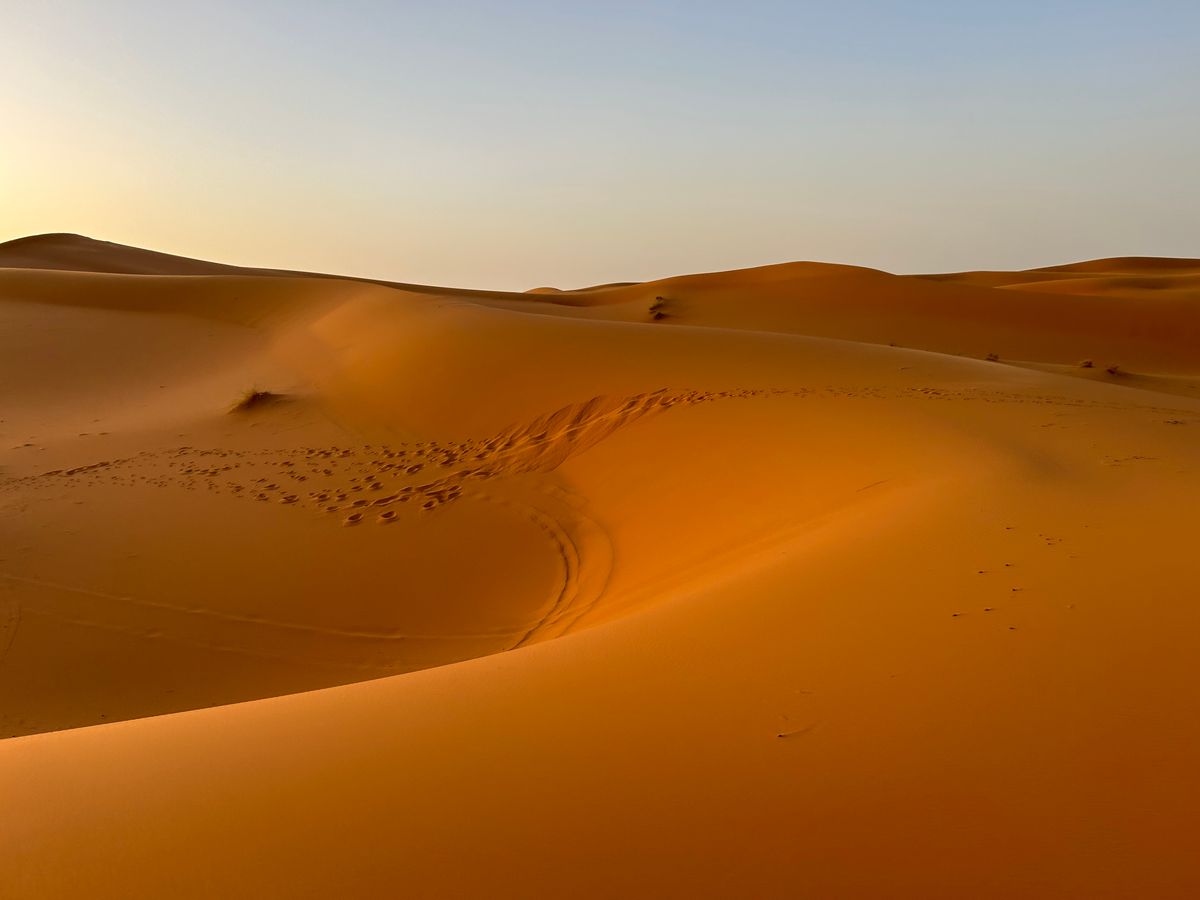
A typical Sahara desert camp experience begins in the late afternoon at the edge of the dunes, often near Merzouga and the great sand sea of Erg Chebbi. You climb onto a camel, and a guide leads the caravan into the dunes as the heat of the day finally breaks. The ride lasts about an hour and ends at a cluster of tents tucked between the ridges, out of sight of any road.
The camp itself is simple and quiet. There is no traffic, no hum of a town, no screens. Once the sun goes down, the only sounds are the wind, a crackling fire, and conversation. Most guests describe the shift in pace as the thing they remember most. If the camel ride is the part you are most curious about, our guide to camel trekking in Merzouga covers what the saddle, the pace, and the terrain feel like in detail.
Erg Chebbi is one of Morocco's two large ergs, a Saharan sand sea of wind-built dunes that rise steeply from the flat hammada around it. Standing at the top of a ridge at dusk, with the sand glowing orange and the camp lanterns flickering below, is the moment most people came for.
Standard Versus Luxury Camp Options
Desert camps fall into two broad categories, and the right choice depends on your budget and how much comfort you want after a long day of travel.
Standard camps
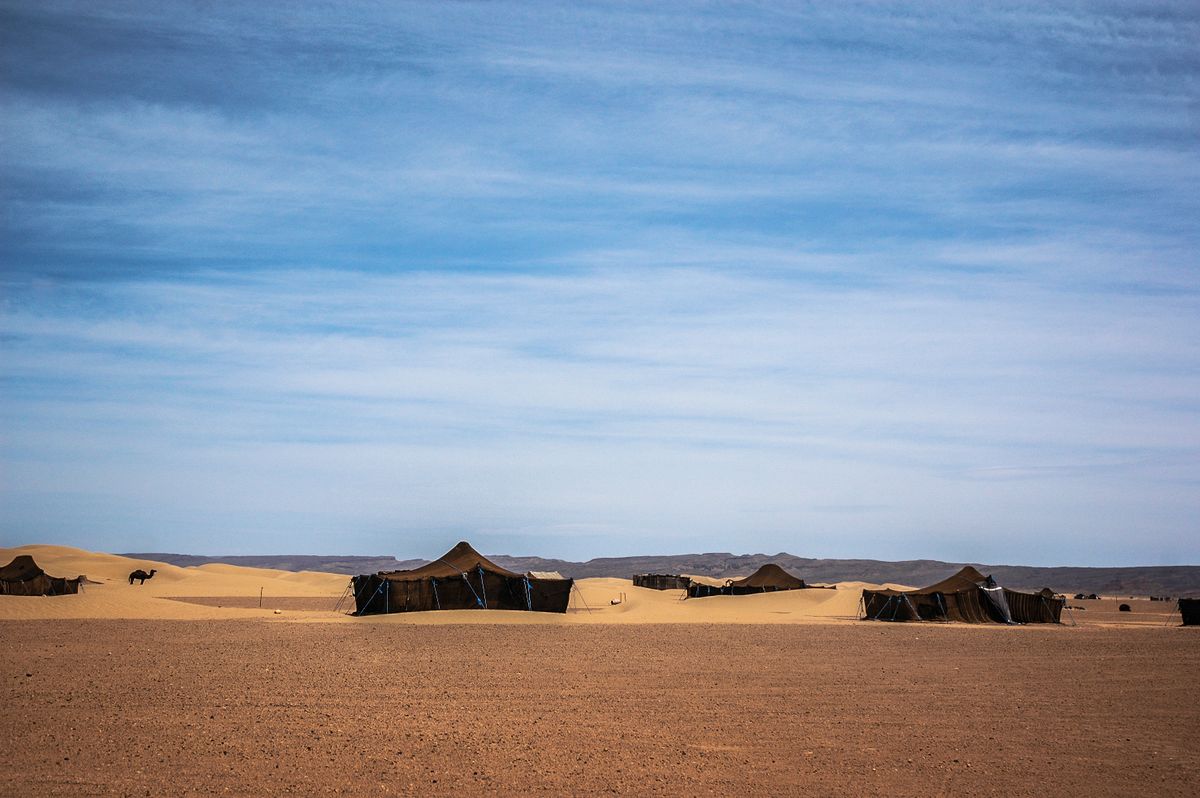
Standard camps give you the full experience at a modest price. You sleep in a canvas or wool tent on a real bed or a thick mattress, with plenty of blankets for the cold hours. Bathrooms are usually shared, electricity comes from solar panels and runs the lights and a charging point, and water is limited. Dinner, drumming, breakfast, and the camel rides are all included. For most travelers this is more than enough, and the shared setting often makes for a friendly evening with other guests.
Luxury camps
Luxury camps add private comfort without losing the setting. Expect larger tents with proper beds, rugs over the sand, heating or extra bedding in winter, and private en-suite bathrooms with hot showers. Some camps serve a multi-course dinner and offer a quieter, more secluded layout. The trade-off is cost: a luxury night can run several times the price of a standard one.
Toubkal Treks runs both standard and private desert camps, so the same operator can tailor the night to your group, whether you want the shared, sociable version or a secluded tent with a hot shower.
Dinner, Drumming, and Berber Hospitality
Dinner is the heart of the evening. After you arrive and watch the sun set from the dunes, the camp staff serve a home-style Moroccan meal. It usually starts with a soup or a plate of salads, moves to a tagine of chicken, lamb, or vegetables with bread, and finishes with fresh fruit and sweet mint tea. The food is cooked on site and served family style around low tables.
After the plates are cleared, the drums come out. Berber and Gnawa rhythms are a living part of desert culture, and the music around the fire is not a staged show so much as a shared evening. Guests are usually handed a drum and encouraged to join, and the circle keeps going as long as people want to play. The warmth of the welcome is something travelers mention again and again. The crew who run these camps grew up in the region, and the hospitality is genuine rather than performed.
Stargazing in the Dunes Far From City Lights
Stargazing is the quiet highlight of the night, and it is the one part of the experience a photograph never fully captures. The camps sit deep in the desert, far from the glow of any town, so there is almost no light pollution to wash out the sky. On a clear, moonless night the stars appear in overwhelming numbers, and the band of the Milky Way is plainly visible to the naked eye.
Give your eyes twenty minutes to adjust to the dark, then lie back on the cool sand away from the camp fire. You will start to pick out constellations, planets, and the occasional shooting star. Many camps keep the lanterns low after dinner precisely so guests can enjoy the sky. If you want to photograph it, bring a tripod and a camera that handles long exposures, because phones struggle in this kind of darkness.
The best stargazing comes on nights around the new moon, when the sky is at its darkest. If seeing the Milky Way is a priority, ask your operator about the moon phase before you book your date.
Sunrise Over the Erg and Morning Rituals
Set an alarm. The desert sunrise is the most peaceful moment of the whole trip, and it is easy to sleep through after a late night by the fire. Most guests wake before first light, climb a nearby dune, and settle in to watch the sky turn from grey to pink to gold as the sun lifts over the erg. The sand changes color minute by minute, and the cold night air warms fast once the light arrives.
Back at camp, breakfast is simple and good: bread, jam, olive oil, perhaps an omelette, and coffee or tea. Then you remount the camels for the ride back out of the dunes while the air is still cool, usually reaching the edge of the desert by mid-morning. From there most itineraries continue toward the gorges and valleys on the long road back north.
A desert night pairs naturally with a wider southern Morocco loop. Most trips fold the overnight camp into a multi-day route from Marrakech, crossing the Atlas passes and the Draa Valley on the way in and out, so the long drive buys you far more than a single night in the dunes.
What to Pack for a Comfortable Camp Night
Packing well is what separates a comfortable desert night from a cold, uncomfortable one. The desert is hot by day and genuinely cold once the sun sets, and that swing catches many first-time visitors off guard. Pack for both ends of the range.
Bring the essentials below:
- Warm layers: a fleece or insulated jacket, plus a hat for the evening. Nights cool quickly and winter nights can be near freezing.
- A headlamp or small flashlight: camps are dark on purpose, and a hands-free light is far more useful than a phone torch.
- Sun protection: sunglasses, a brimmed hat or scarf, and high-SPF sunscreen for the camel ride and the daytime heat.
- A scarf or shemagh: useful against sun, wind, and blowing sand, and warm around the neck at night.
- Closed shoes plus sandals: trainers for walking the dunes, and something easy to slip on around camp.
- A small daypack: carry water, your camera, a power bank, and any medication, since the main luggage often stays with the vehicle.
- Reusable water bottle: stay well hydrated through the dry daytime heat.
For a full breakdown by season, including fabrics and footwear, see our guide on what to wear in the Sahara Desert.
Planning Your Desert Night
Morocco is drawing record numbers of visitors, with the country welcoming 19.8 million tourists in 2025, according to Ecofin Agency reporting on Ministry of Tourism figures. Popular desert dates fill up, so the single most useful next step is to pick your travel window, check the moon phase if stargazing matters to you, and reserve your camp well ahead. Decide early whether you want a standard or luxury tent, confirm any dietary needs with your operator, and build the overnight camp into a longer southern loop so the long drive pays off with more than one night in the dunes.
Frequently asked questions
Is one night in a Sahara desert camp enough?
For most travelers, yes. One night covers the camel ride in, dinner, drumming, stargazing, and sunrise. Add a second night only if you want slower days and more time in the dunes.
Are desert camps cold at night?
They can be. Desert nights cool sharply once the sun drops, especially in winter, so a warm jacket and extra layers make the difference between a comfortable night and a restless one.
Do desert camps have bathrooms and electricity?
Standard camps usually have shared toilets and limited solar power for lights and charging. Luxury camps offer private en-suite bathrooms, running water, and more reliable electricity.
What is the food like at a Berber desert camp?
Expect a home-style Moroccan dinner: soup or salad, a tagine of chicken, lamb, or vegetables with bread, and fresh fruit or mint tea to finish. Dietary needs can usually be arranged in advance.
Can you see the Milky Way from a Sahara camp?
On a clear, moonless night, yes. The camps sit far from city light, so the Milky Way, countless stars, and the occasional shooting star are visible to the naked eye.