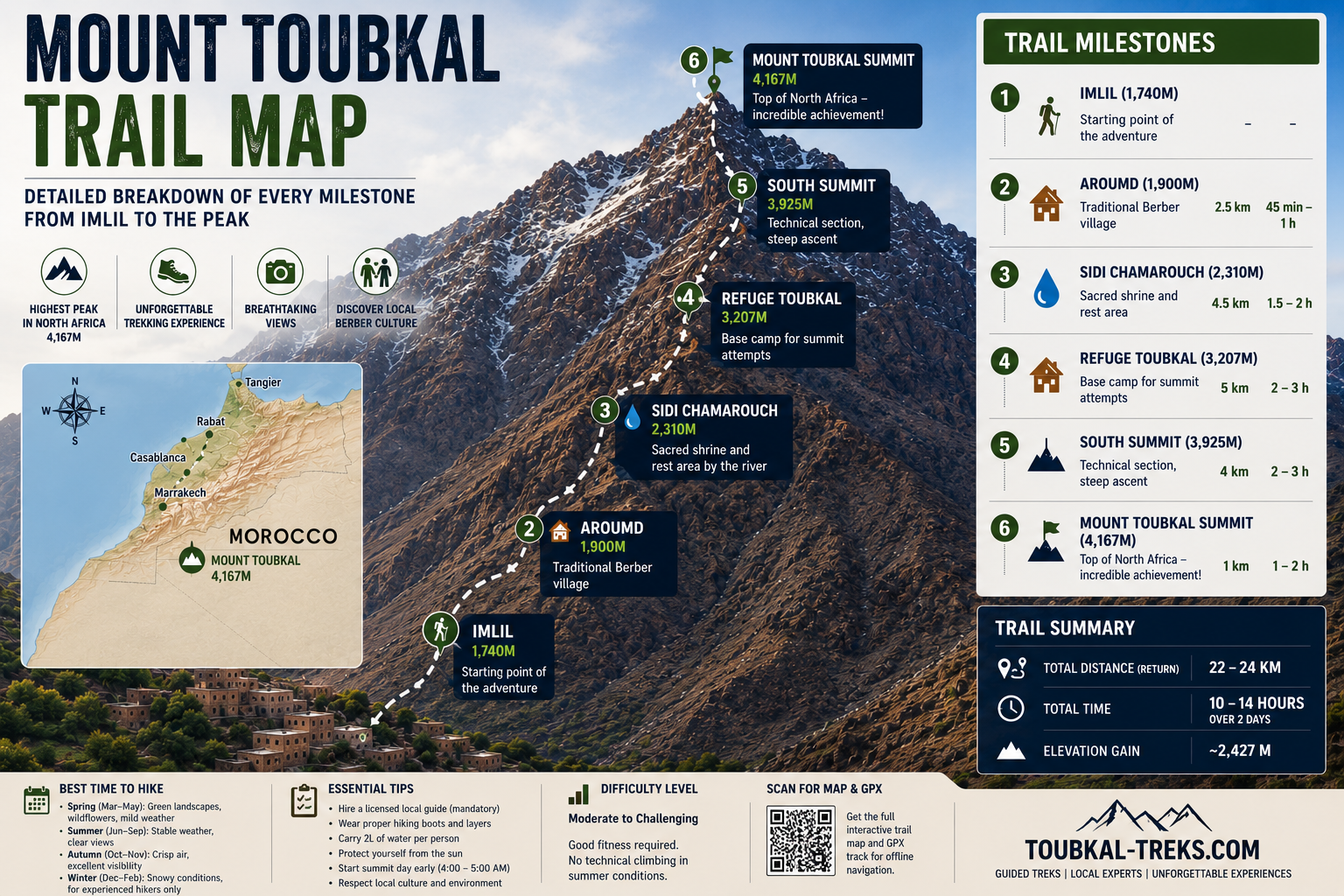
Mt Toubkal Trek – Summit North Africa’s Highest Peak
Mt Toubkal Trek Summit North Africa’s Highest Peak, Standing at 4,167 meters (13,671 feet) above sea level, Mount Toubkal is the highest peak in Morocco and all of North Africa. Nestled in the heart of the High Atlas Mountains, the Toubkal trek is one of the most rewarding adventures in the world, offering not only the thrill of reaching the summit but also a deep cultural journey through Berber villages, mountain valleys, and breathtaking landscapes.
For many travelers, the Toubkal trek is the highlight of their Morocco trip. It is challenging yet achievable, and with proper guidance, accommodation, and support, even first-time trekkers can stand on the roof of North Africa.
Where Does the Toubkal Trek Start?
The adventure begins in Marrakech, from where most trekkers transfer to Imlil Village—a charming mountain hub located just 70 km from the city. Imlil, often referred to as the gateway to Toubkal, is the starting point for almost all treks into Toubkal National Park. From here, trails lead through walnut groves, juniper forests, and rugged valleys towards the summit.
Trekking Experience
Unlike technical climbs that require ropes and advanced alpine skills, the Toubkal ascent is non-technical, but it does demand good fitness and determination. The trek typically takes 2 to 3 days, depending on the chosen route.
On the first day, trekkers usually hike from Imlil (1,740m) to the Toubkal Refuge (3,200m), passing through scenic Berber villages such as Aroumd and Sidi Chamharouch, a small shrine and resting place on the way.
On the second day, an early morning ascent begins before sunrise. Trekkers climb steep rocky trails to reach the summit of Mount Toubkal. The reward is extraordinary panoramic views stretching across the Atlas Mountains, the Anti-Atlas, the Sahara Desert, and even the Atlantic coastline on clear days.
Accommodation on the Trek
Accommodation during the trek is simple yet comfortable, designed to suit mountain conditions:
In Imlil Village (the night before the trek, if needed): Guests usually stay in a traditional Berber guesthouse or a small mountain lodge with warm hospitality, en-suite rooms, and authentic Moroccan meals.
On the mountain: Trekkers stay overnight at the Toubkal Refuge (Neltner Hut at 3,200m). The refuge offers shared dormitory-style rooms with bunk beds, blankets, and shared facilities. In warmer months, camping is also an option near the refuge.
This combination of Berber village guesthouses and mountain refuges makes the journey both authentic and adventurous.
Food on the Trek
Food is an important part of the Toubkal experience. A cook travels with the group and prepares fresh Moroccan meals throughout the trek. Typical meals include:
Breakfast: Bread, pancakes, jam, honey, eggs, and hot drinks.
Lunch: A picnic with salads, fresh fruit, couscous, or sandwiches served along the trail.
Dinner: A hearty meal at the refuge or guesthouse, usually tagines, pasta, or couscous, followed by fruit or dessert.
Snacks and tea breaks are also provided to keep energy levels high.
All dietary requirements can usually be catered for with advance notice.
Luggage and Mule Support
Trekkers are not expected to carry heavy luggage. Mules and muleteers accompany the group and carry main bags, food supplies, and equipment. Travelers only need to carry a small daypack with essentials such as water, snacks, a camera, and layers of clothing. This makes the trek much more comfortable and allows participants to fully enjoy the journey.
Safety and Local Guides
Although the Toubkal trek is accessible, it is best done with an experienced local guide. Guides not only ensure safe navigation through mountain trails but also share insights into Berber culture, local traditions, and the natural environment. All treks are supported by local muleteers and cooks, making it a team effort rooted in traditional mountain hospitality.
Best Time to Trek Mount Toubkal
The mountain can be climbed year-round, but each season offers a unique atmosphere:
Spring (March–May): Green valleys, wildflowers, pleasant trekking conditions.
Summer (June–August): Dry and warmer, the easiest season for climbing.
Autumn (September–November): Crisp, clear days with fewer trekkers.
Winter (December–February): Snowy conditions, requiring crampons and winter gear, making it a true alpine adventure.
Fitness and Difficulty
The trek is rated moderate to challenging. Daily hikes last between 5 to 7 hours, with steep ascents at altitude. While no technical climbing skills are required, a reasonable level of fitness and mental preparation is essential. Many first-time trekkers succeed in reaching the summit with proper pacing and guidance.
What to Pack for the Toubkal Trek
Clothing: Layered clothing, waterproof jacket, thermal wear, gloves, hat.
Footwear: Sturdy trekking boots with good ankle support.
Gear: Sleeping bag, trekking poles, sunglasses, headlamp, water bottle.
Other: Sunscreen, snacks, and personal medication.
During winter, crampons and ice axes may be required, and these can be rented locally.
Why Choose Toubkal Treks?
At toubkal-treks.com, we provide fully organized treks to Mount Toubkal and the Atlas Mountains. Our packages include:
Professional Berber guides with deep knowledge of the mountains.
Mules and muleteers to carry luggage and supplies.
Accommodation in guesthouses, mountain refuges, or tents (depending on the season).
Freshly prepared Moroccan meals during the trek.
Transfers from Marrakech to Imlil and back.
We ensure that every detail is taken care of so you can focus on the adventure itself.
Conclusion
The Mount Toubkal trek is more than a climb—it is an immersive journey into Morocco’s culture, landscapes, and spirit of adventure. With comfortable accommodations, hearty food, mule support, and the guidance of experienced Berber mountain teams, summiting the highest peak in North Africa becomes an experience of a lifetime.
If you are ready to challenge yourself and stand on the roof of North Africa, discover our guided treks at toubkal-treks.com and let us take you on an unforgettable adventure.