Camel Trekking in Merzouga
A camel trek in Merzouga is a short, scenic ride on a one-humped dromedary across the Erg Chebbi dunes, usually timed so you reach a desert camp as the sun goes down. Expect about an hour in the saddle each way, a gentle walking pace, big open views, and a night under the stars rather than an endurance expedition. This guide walks through the ride itself, how long it lasts, comfort tips for beginners, camp life, animal welfare, and the best times to go.
Merzouga sits on the western edge of Erg Chebbi, a sea of wind-sculpted sand in southeastern Morocco. The village is the launch point for most Sahara trips in this region, and the camel ride into the dunes is the classic way to arrive at a camp. If you are still deciding between dune fields, our guide to Merzouga vs Erg Chegaga compares the two before you commit to a route.
Key takeaways
- A typical Merzouga camel trek is a short ride of roughly an hour each way into the Erg Chebbi dunes, not a full day in the saddle.
- Late afternoon departures let you reach a desert camp around sunset, then watch the stars after dark.
- The animals are one-humped dromedaries; responsible operators limit rider weight, give the camels rest, and keep caravans short.
- Spring and autumn are the most comfortable seasons; summer midday heat makes dawn and dusk the only sensible riding windows.
- First-time riders stay more comfortable by sitting back during the camel’s stand-up, holding the saddle horn, and packing a scarf for sun and sand.
Riding into the Erg Chebbi dunes at sunset
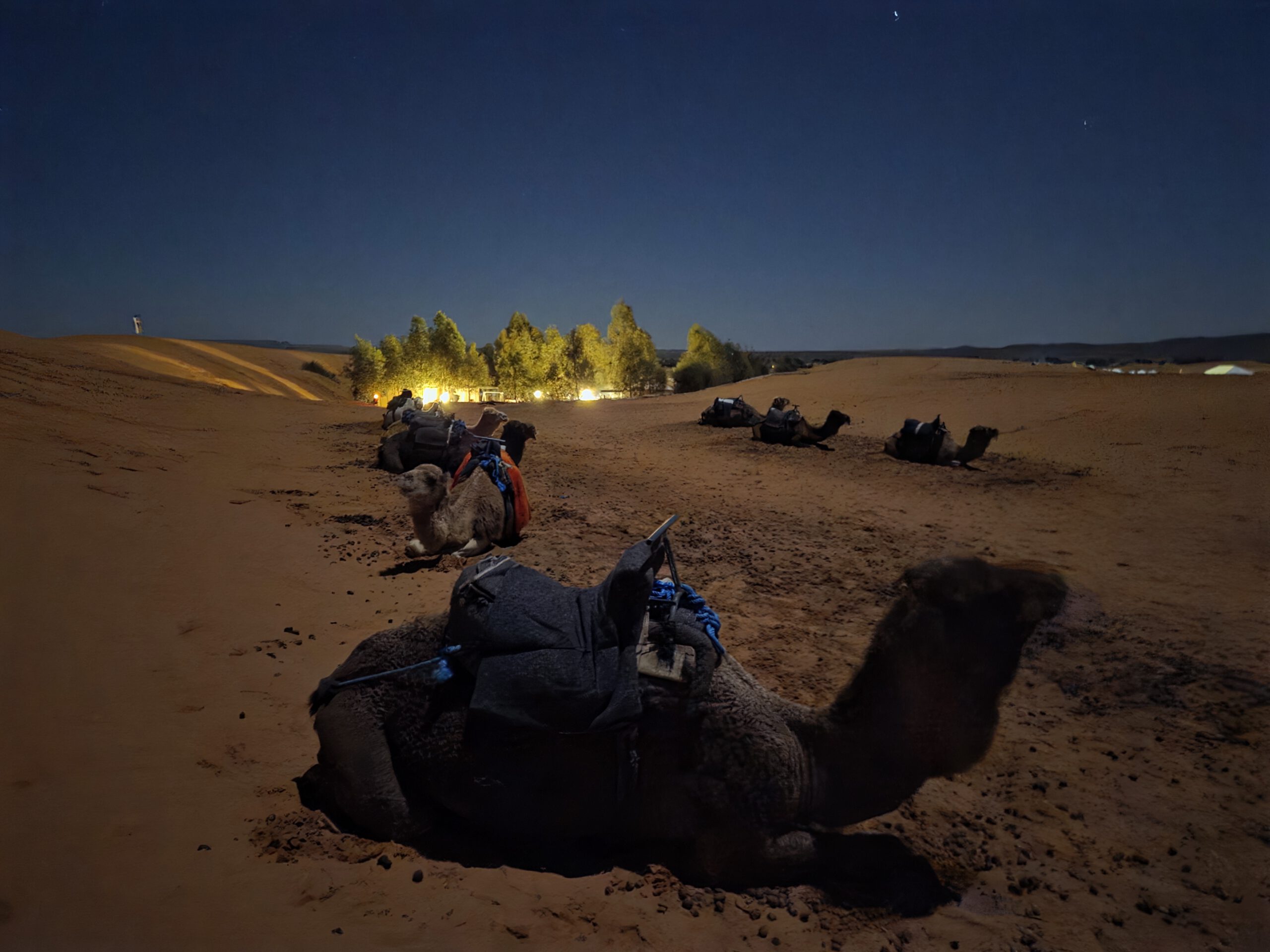
The ride usually begins in the late afternoon. A guide leads a short caravan of dromedaries roped nose to tail, and you climb aboard a padded saddle set over blankets. The camel kneels to let you on, then rises back legs first, which tips you forward sharply before it levels out. That stand-up is the part first-timers remember most.
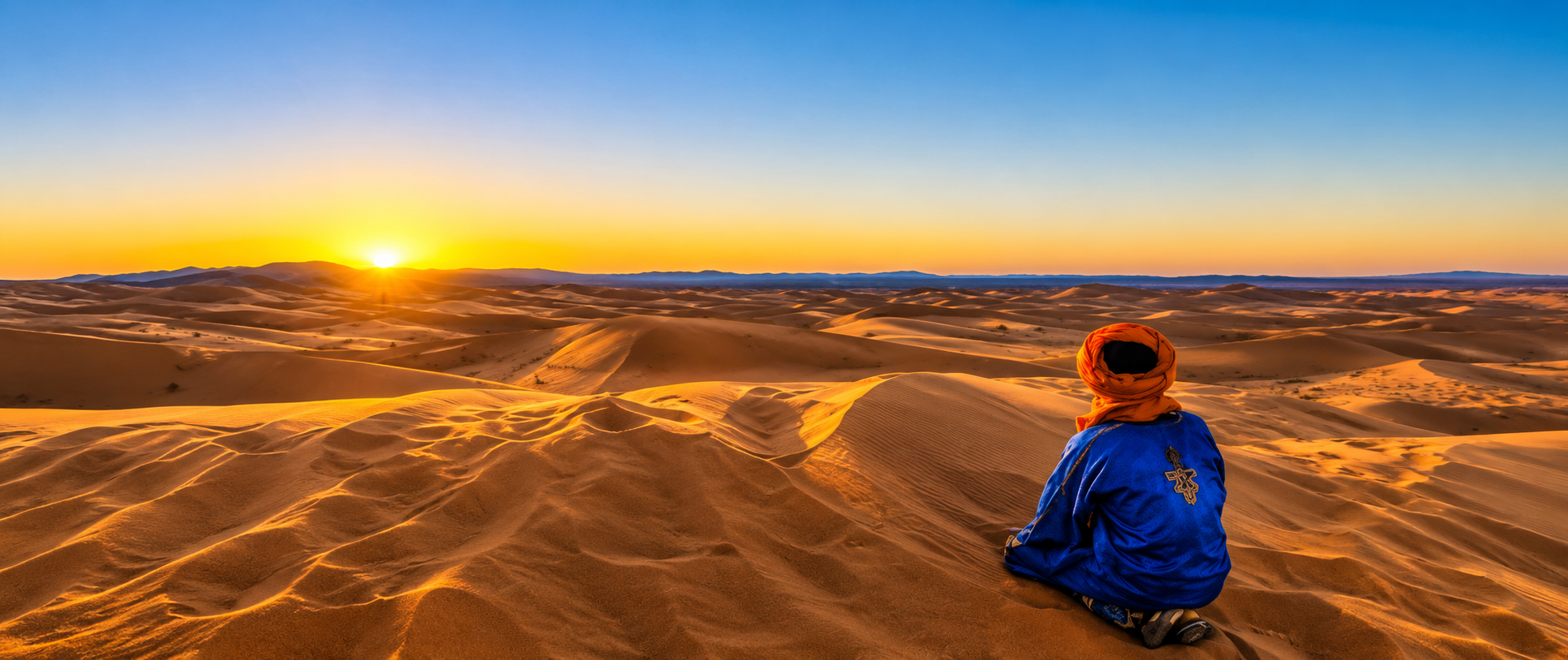
Once moving, the pace is slow and rocking. You cross firm sand at the dune edge before climbing into the taller crests, where the ridgelines glow orange and the shadows stretch long. Golden hour is the reason most people book the trek: the low sun turns the whole erg copper and the temperature finally eases off. Many travelers pair the ride with a wider itinerary that threads the dunes into a multi-day loop out of Marrakech.
How long camel rides typically last
Camel trekking in Merzouga is shorter than many people expect. For an overnight trip, the ride is roughly an hour each way: out to the camp before dusk, and back toward the village after breakfast. A sunset-only outing without an overnight stay tends to run two to three hours in total once you count the time to reach a good viewpoint and return.
The dunes closest to Merzouga are reachable in well under an hour, so operators often choose a camp that balances a scenic ride against a reasonable time in the saddle. If you would rather spend less time on the camel, you can ask to ride one way and return by 4×4, which many camps allow. An hour of slow rocking is enough novelty for most riders, and it keeps the experience comfortable for the animals too.
Comfort tips for first-time riders
A few small habits make a big difference on your first camel ride.
- When the camel stands and sits, lean back for the rise and forward for the drop, and keep a firm grip on the saddle horn. The motion is abrupt but brief.
- Sit tall and let your hips rock with the gait rather than fighting it. Clenching your legs tires you out fast.
- Wear long, loose trousers. Bare legs chafe against the saddle and the sun is strong even late in the day.
- Bring a scarf or light buff. It shields your face from blowing sand and doubles as sun cover; our guide on what to wear in the Sahara Desert covers the full kit.
- Pack light for the ride. A small daypack with water, a camera, and a layer for the evening is plenty, since the camp handles the rest.
Closed shoes beat sandals, because sand gets hot and the stirrup-free saddle means your feet dangle. If you have back or hip issues, tell your guide in advance so they can set the pace and pick a shorter route.
Overnight camp life and stargazing
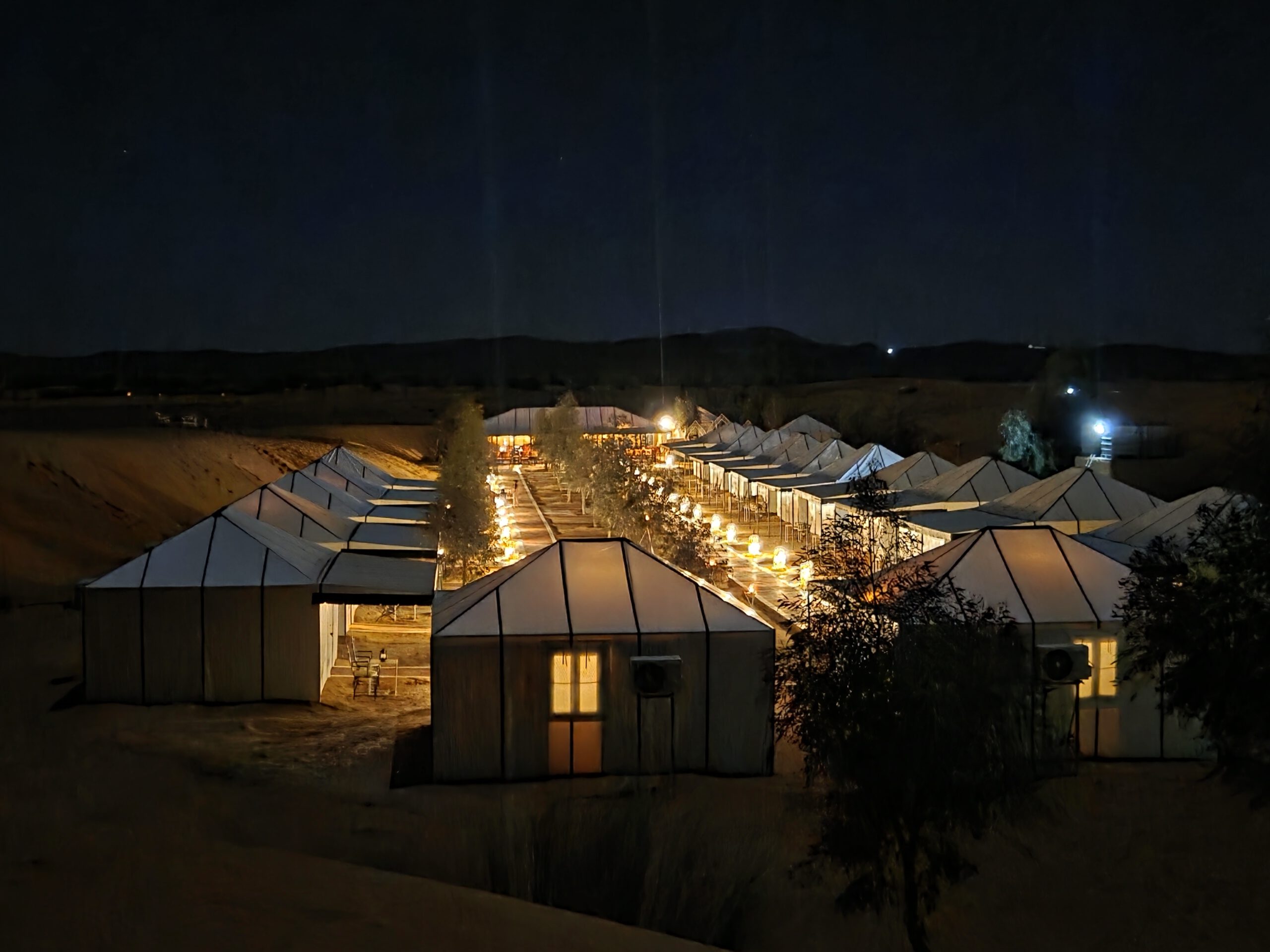
Desert camps in Erg Chebbi range from simple to genuinely luxurious, but the rhythm is similar. You arrive as the light fades, drop your bag in a tent, and climb a nearby dune to watch the sunset. Dinner is usually a tagine served communally, often followed by Berber drumming around a fire. The camp staff are frequently from local families with deep roots in the region, and they are often the best source of stories about life on the edge of the sand.
After dark, the main event is the sky. With no city lights for miles, the stars over Erg Chebbi are dense and bright, and on a clear, moonless night the Milky Way is easy to pick out. Bring a warm layer: even after a hot day, desert nights cool quickly, and winter nights can get genuinely cold. A headlamp helps for moving between tents without stepping on anyone’s slippers.
Animal welfare and responsible operators
The animals you ride are dromedaries, the one-humped camels of North Africa and Arabia, not the two-humped Bactrian camels of Central Asia. They are well suited to this landscape. As National Geographic notes, a dromedary’s hump “stores up to 80 pounds of fat, which a camel can break down into water and energy when sustenance is not available,” which is part of their legendary ability to travel up to 100 desert miles without water (National Geographic). That resilience does not mean the animals should be worked carelessly.
A responsible operator keeps rides short, limits how many hours each animal works, and caps rider weight so no single camel is overloaded. Look for caravans where the dromedaries have good body condition, no visible sores from the saddle or nose rope, and access to shade and water between trips. If an animal looks thin or exhausted, or if a guide pushes a tired camel to keep moving, walk away and book elsewhere. At Toubkal Treks we work with camp partners who rest their animals and keep caravans small, which is better for the camels and for your experience.
Choosing well-run operators is the single most effective thing a traveler can do here, because demand shapes how the animals are treated. Asking a few questions about ride length and rider limits before you pay signals that welfare matters.
Best times of day and year for the experience
Timing is everything in the Sahara. The two best windows of the day are sunrise and sunset, when the light is soft, the sand photographs beautifully, and the heat is bearable. Midday rides in warm months are uncomfortable for riders and hard on the camels, which is why most treks avoid them.
For the season, spring and autumn are the sweet spots. Roughly March through May and September through November bring warm days and cool but manageable nights, ideal for both the ride and the camp. Summer middays are extremely hot, so trips shrink to dawn and dusk outings. Winter is quieter and the days are pleasant, but nights near the dunes can drop toward freezing, so pack accordingly. If a Sahara leg is part of a bigger Morocco adventure that also takes in the mountains, plan the desert nights around the most comfortable months.
Whichever season you pick, book your camp and ride a little ahead during spring and autumn, when the comfortable weather draws the biggest crowds. Confirm the ride length and the animal welfare standards when you reserve, then simply show up ready to slow down and watch the desert change color.
Frequently asked questions
How long does a camel ride in Merzouga last?
Most overnight treks involve about an hour of riding each way between the village edge and the desert camp. Sunset-only rides are usually a two to three hour outing including the walk out and back.
Are the camels in Merzouga actually camels?
They are dromedaries, the one-humped camels native to North Africa and Arabia. Bactrian camels, the two-humped kind, live in Central Asia and are not used here.
What is the best time of year for camel trekking in Merzouga?
Spring (March to May) and autumn (September to November) are the most comfortable. Summer middays are extremely hot, so rides shift to dawn and dusk, and winter nights can be very cold.
Is camel trekking in Merzouga ethical?
It can be, if you choose an operator that limits rider weight, keeps rides short, rests the animals, and provides water and shade. Avoid any caravan where the animals look thin or exhausted.