Key takeaways
- The classic Mount Toubkal climb tour runs two days from Imlil, with an overnight at a mountain refuge before a pre-dawn summit push.
- Toubkal reaches 4,167 m (13,671 ft), the highest point in North Africa, so the standard south cirque route is a demanding walk rather than a technical climb outside winter.
- A guided tour covers permits, a certified mountain guide, refuge meals, mules for luggage and emergency support that solo hikers must arrange alone.
- No prior mountaineering is needed, but you should train for long uphill days, and altitude sickness risk rises once you sleep above 2,450 m.
- Toubkal pairs well with a Sahara desert extension or a longer Atlas traverse, booked as a single trip through Toubkal Treks.
A Mount Toubkal climb tour reaches the highest summit in North Africa, and the classic version takes two days starting from the village of Imlil. You trek to a high mountain refuge on the first day, sleep at altitude, then set off before dawn to reach the 4,167 m (13,671 ft) top and descend the same day. This guide covers the standard route, what a guided tour includes, the fitness and altitude you should prepare for, and how to reserve a trip that fits your plans.
The classic 2-day Toubkal climb tour from Imlil
The standard Mount Toubkal climb tour is a two-day itinerary that begins in Imlil, a trailhead village in the High Atlas roughly an hour and a half by road from Marrakesh. Imlil sits at around 1,740 m, which already gives your body a head start on acclimatisation before the real ascent begins.
Day one is a walk of several hours up the Mizane valley, passing the shrine of Sidi Chamharouch, to one of the mountain refuges that sit near 3,200 m. You arrive in the afternoon, eat an early dinner, and rest. Day two starts in darkness, usually between 4 and 5 a.m., so you reach the summit for sunrise and have the whole morning to descend safely back to Imlil before the weather turns, which it often does by midday in the mountains.
Two days is the most popular format because it is efficient and fits neatly around a Marrakesh city break. If you have the time, adding a third day for acclimatisation around the refuge noticeably improves your chances of reaching the top feeling strong rather than struggling.
The standard south cirque summit route explained
Most climb tours use the south cirque route, the normal and least technical line to the summit. From the refuge, the trail climbs scree slopes and a series of switchbacks into a high bowl, then follows the ridge to the summit pyramid. In summer and early autumn it is a steep, rocky hike with no ropes or technical climbing required, though the loose ground and thin air make the final push slow going.
The south cirque is also the safest option for most fit travellers because it avoids the exposed terrain of the north cirque, which is longer and more demanding. The trade-off with any route on Toubkal is altitude rather than difficulty of movement: the summit stands at 4,167 m, the highest point in Morocco, the Atlas Mountains and the whole of North Africa, according to the mountaineering reference PeakVisor.
Winter changes the picture entirely. From roughly December to April the route holds snow and ice, and the switchbacks become a genuine alpine ascent that calls for crampons, an ice axe and the know-how to use them. If a winter summit is your goal, the season you pick matters as much as the route, which is worth planning carefully using a dedicated season guide.
What a guided climb tour includes versus going solo
A guided Mount Toubkal climb tour bundles the permits, people and logistics that an independent hiker would otherwise piece together alone. Inside Toubkal National Park a licensed mountain guide is required, and a guided package typically also covers refuge accommodation, meals on the mountain, mules to carry heavy luggage to the refuge, and transfers to and from Imlil.
Here is how the two approaches compare in practice:
- Guide and route-finding. A certified guide reads the weather, sets a sustainable pace for altitude, and knows the line when cloud or snow hides the trail. A solo hiker carries all of that responsibility.
- Logistics. Guided trips pre-book the refuge, which fills up in peak season, and arrange mules so you climb with a light daypack. Solo climbers book beds, carry their own loads and sort their own transport.
- Safety and emergencies. With a guide you have someone trained to recognise altitude sickness early and to coordinate a descent or rescue. Alone at 4,000 m, a problem becomes much harder to manage.
- Cost and flexibility. Going solo can be cheaper and more spontaneous, but you trade away the margin of safety and local knowledge that make the summit far more likely.
For a detailed breakdown of exactly what sits inside a full package, our guide to the Mount Toubkal guided trek package walks through every inclusion so there are no surprises on arrival.
Fitness, altitude, and safety considerations
Mount Toubkal does not require climbing experience, but it does demand honest fitness and respect for altitude. The summit day involves a long ascent and descent at height, so the best preparation is regular hill walking or stair work in the months before your trip, ideally with a loaded daypack to mirror the real thing.
Altitude is the factor most people underestimate. The United States Centers for Disease Control and Prevention notes that unacclimatised travellers who sleep at or above 2,450 m (8,000 ft) are at risk of acute mountain sickness, with symptoms such as headache, nausea and poor sleep, as set out in the CDC Yellow Book. A Toubkal refuge sits well above that line and the summit higher still, so a slow ascent, plenty of water and an extra acclimatisation night are your best defences.
Weather is the other variable. High Atlas afternoons bring cloud, wind and sudden temperature drops even in summer, which is why guided tours summit early and descend before conditions change. Pack layers, sun protection and sturdy boots whatever the season.
Add-on options like Sahara extensions or Atlas traverses
A Toubkal climb tour slots easily into a longer Moroccan adventure, and combining trips through one operator keeps transfers and timing simple. Two extensions are especially popular with international travellers who have already made the long flight.
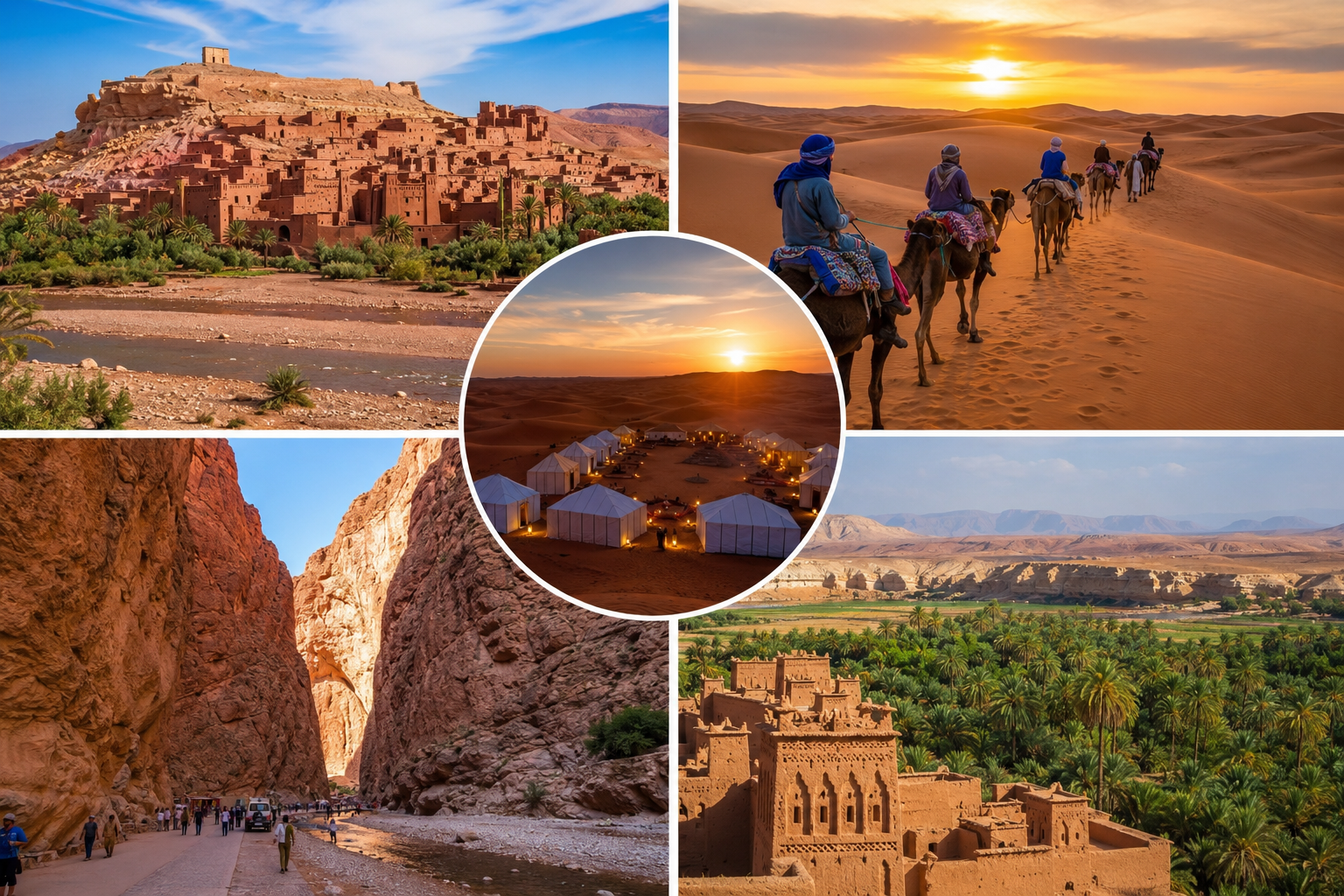
The first is a Sahara desert extension. After descending from Toubkal you travel east to the dunes for camel treks and a night under the stars at a desert camp, a complete change of scenery from the High Atlas peaks. If that appeals, our Sahara desert tour from Marrakech guide explains how the two trips fit together.
The second is a longer Atlas traverse. Instead of climbing Toubkal and returning, you link valleys, Berber villages and secondary peaks over several days, with the summit as one highlight among many. A traverse suits travellers who want depth over speed and who are comfortable with consecutive days on the trail.
How to reserve your Toubkal climb tour with us
Booking a Mount Toubkal climb tour with Toubkal Treks starts with telling us your travel dates, your group size, and whether you want the standard two-day climb or a longer itinerary with acclimatisation or extensions. As a Morocco-based operator we handle the national park permits, your licensed guide, refuge beds, mules and transfers from Marrakesh, so you arrive with the logistics already solved.
If you are weighing a summer or winter ascent, send your preferred month and we will match the route and equipment to the conditions, then confirm availability at the refuge. Send us your travel dates through the Toubkal Treks booking page this week, and we will return a firm two-day itinerary and price so you can lock in your summit before the refuge fills for your season.
Frequently asked questions
How many days do you need to climb Mount Toubkal?
The standard climb tour takes two days from Imlil: a trek to the refuge on day one and a pre-dawn summit with return on day two. Adding an acclimatisation day makes it a three-day trip and improves summit success.
Do you need a guide to climb Mount Toubkal?
A licensed guide is required in Toubkal National Park and is strongly recommended year-round. Guides handle route-finding, pacing for altitude, refuge logistics and emergencies, which matters most in winter snow conditions.
Is climbing Mount Toubkal difficult?
The south cirque route is a strenuous high-altitude hike rather than a technical climb in summer. You need good cardiovascular fitness for long uphill days. Winter ascents add snow and ice and require crampons and an ice axe.
What is the best time for a Toubkal climb tour?
Late spring through early autumn offers the most stable conditions for non-technical ascents. Winter is possible for those with snow skills or a winter-equipped guided tour.
Can you combine Toubkal with a Sahara desert tour?
Yes. Many travellers add a Sahara extension or a longer Atlas traverse to the climb, booking both as one itinerary so transfers and logistics are handled together.