Key takeaways
- A guided 2-day Toubkal trek in 2026 typically runs from roughly 100 to 360 euros per person, depending mainly on group size.
- A 3-day trek costs more because of the extra refuge night and meals, but the daily rate per person usually drops.
- The Refuge du Toubkal charges 30 euros per night in winter and 25 euros in summer for non-members, with meals around 5 to 10 euros each.
- A licensed mountain guide is mandatory in Toubkal National Park, so guide fees are built into every legitimate package.
- Budget separately for tips, gear hire, and the Marrakech to Imlil transfer, which are often excluded from the headline price.
A guided Mount Toubkal trek in 2026 costs roughly 100 to 360 euros per person for the standard two-day climb, and about 180 to 250 euros per person for the slower three-day version. Where you land in that range depends almost entirely on group size, the season, and how much the operator bundles into the headline price. This guide breaks down the mount toubkal trek cost in 2026 so you can compare quotes with confidence and spot what a cheap price is quietly leaving out.
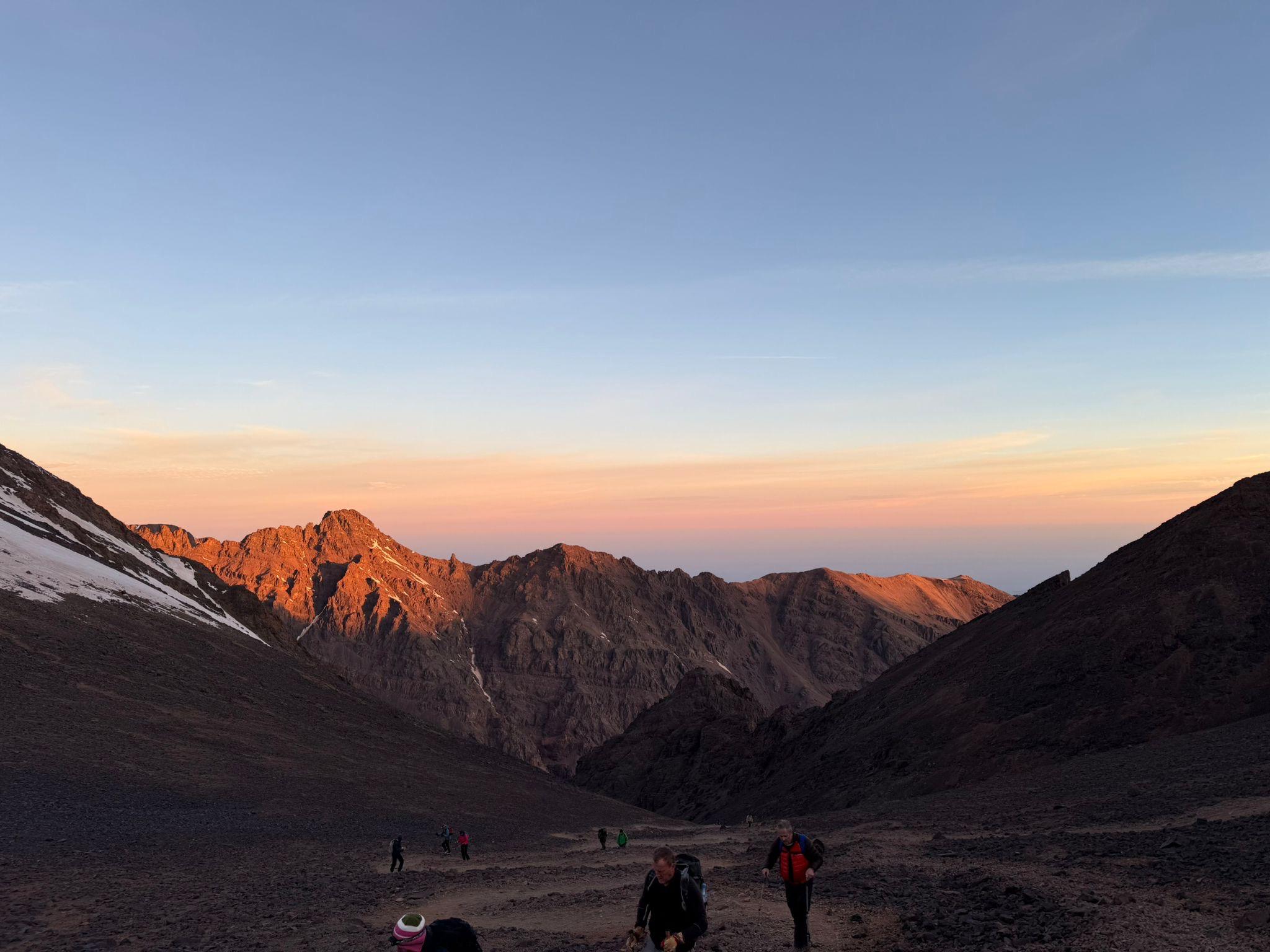
Mount Toubkal stands at 4,167 metres, the highest peak in North Africa (PeakVisor). Reaching the summit is a serious high-altitude walk rather than a technical climb, which is why most operators sell it as a two or three-day package from the village of Imlil.
Mount Toubkal Trek Cost in 2026: 2-Day and 3-Day Price Ranges
The two-day trek is the most popular option and the one most quotes refer to. For a shared group departure, prices usually start around 100 to 150 euros per person. Private departures for a solo traveller or a couple push higher, often landing between 190 and 360 euros per person, because the fixed costs of a guide and mule are split across fewer people.
The three-day trek spreads the same ascent over a gentler schedule, adding an extra night and more acclimatisation time. Headline prices typically sit around 180 to 250 euros per person. The total is higher than the two-day trip because of the second refuge night and extra meals, but the cost per day usually works out lower, and your summit odds improve with the slower pace. Which format suits you comes down to your fitness, your schedule, and how much acclimatisation time you want on the mountain.
These figures move with the exchange rate. The Moroccan dirham trades at roughly 10 to 11 to the euro in 2026, so a quote in dirhams can look very different once converted. Always confirm the currency and whether the price is per person or per group before comparing.
What's Usually Included in the Cost
A fair package price generally covers the core of the trip. Most reputable operators, Toubkal Treks included, bundle the following into a standard quote:
- A licensed English-speaking mountain guide for the full trek
- One or two nights at the mountain refuge, depending on the itinerary
- Meals on the mountain, usually breakfast, a packed lunch, and dinner
- A mule and muleteer to carry group gear and food
- National park entry and checkpoint formalities
The refuge night is a real, verifiable cost you can check yourself. The Refuge du Toubkal charges non-members 30 euros per night in winter and 25 euros in summer, with breakfast at 5 euros and lunch or dinner at 10 euros each (Refuge du Toubkal official rates). When an operator quotes a very low all-in price, those fixed refuge and meal costs still have to be paid by someone, so it is worth asking how they are covered.
A licensed guide is not optional. Inside Toubkal National Park, trekkers are required to use a certified mountain guide, and checkpoints along the route to Sidi Chamarouch and the refuge enforce it. That requirement is one reason guide fees appear in every legitimate package, and why a quote with no guide line is a red flag.
Extra Expenses: Gear Hire, Tips, and Transfers
The headline price rarely tells the whole story. Three categories of extra cost catch first-time trekkers out.
Gear hire. Summer trekkers usually need nothing beyond sturdy boots and layers. In winter, crampons, an ice axe, and sometimes mountaineering boots are essential, and you can hire them in Imlil for a modest daily fee rather than buying a full kit. Factor that rental into a cold-season budget before you travel.
Tips. Tipping the guide and muleteer is customary across Moroccan trekking and is almost never included in the package price. Think of it as a separate line in your budget: a modest daily amount for the guide and a smaller amount for the muleteer, handed over at the end of the trip. It is appreciated rather than demanded, but it is a genuine part of the local pay structure.
Transfers. Getting from Marrakech to the trailhead at Imlil is sometimes bundled and sometimes not. A shared grand taxi seat is cheap, while a private transfer for your group costs more but saves time and hassle. If your quote looks unusually low, check whether the roughly 90-minute drive to Imlil is included before you book.
Group Versus Private Trek Pricing
Group size is the single biggest lever on your per-person price. A guide, a mule, and a muleteer cost roughly the same whether they lead two people or eight. Spread across a larger shared group, those fixed costs shrink per head, which is why joining a scheduled group departure is the cheapest way up the mountain.
A private trek flips that maths. You pay for exclusive use of the guide and mule, so a solo traveller carries the full fixed cost alone and pays the top of the range. The upside is flexibility: your own pace, your own departure date, and a guide focused entirely on your party. Couples and families often find a private trek worth the premium, while solo budget travellers usually save by joining others.
When you compare two quotes that look far apart, the difference is frequently just group size rather than quality. Ask how many people are on the departure before you judge a price as cheap or expensive.
Winter Trek Cost Differences
Winter on Toubkal is a different undertaking, and the price reflects it. From roughly December to March the summit ridge holds snow and ice, which brings three cost drivers.
First, you need technical gear: crampons and an ice axe at a minimum, hired in Imlil or supplied by the operator. Second, winter conditions call for a guide experienced on snow, and that expertise commands a higher fee. Third, the refuge itself charges more in the colder months, 30 euros per night for non-members against 25 in summer, as noted in the official rates above.
Added together, a winter ascent typically costs a modest premium over the same summer trek. The reward is a quieter mountain and dramatic snow-covered scenery, but it demands more preparation and a careful eye on safety before you commit to a cold-season climb.
How to Judge Value When Comparing Operators in 2026
The cheapest quote is rarely the best value, and the most expensive is not automatically the safest. Use a short checklist to compare like with like.
- Confirm what is included. A low price that excludes the refuge, meals, mule, or transfer may end up costing more than a higher all-in quote once you add the gaps back.
- Check the group size. A per-person price only means something once you know how many people share the fixed costs.
- Verify the guide is licensed. This is a legal requirement, not an upsell. A quote that skips it is cutting a corner that matters.
- Ask about the ratio and the itinerary. A slower three-day schedule and a sensible guide-to-trekker ratio improve both safety and summit success, especially at altitude.
- Read the cancellation and weather policy. On a high peak, flexibility has real value when conditions turn.
Altitude is the quiet variable behind many of these choices. The summit sits well above 4,000 metres, and rushing it raises the risk of altitude sickness, which is worth understanding before you pick the fastest, cheapest option. Pacing can matter more than price when you are this high.
Set a realistic budget, decide between a shared group and a private departure, then request a single itemised quote so you can see exactly what each operator includes. From there, picking a trek that matches your dates and fitness is straightforward. If you are ready to plan, compare the current routes and departures on our Mount Toubkal climb tours and book the format that fits your 2026 trip.
Frequently asked questions
How much does a 2-day Mount Toubkal trek cost in 2026?
Expect roughly 100 to 360 euros per person. The lower end applies to larger shared groups, while solo travellers and private pairs pay the most.
Is a guide required to climb Mount Toubkal?
Yes. A licensed mountain guide is mandatory inside Toubkal National Park, and checkpoints along the trail enforce it, so guide fees are part of any legitimate package.
Why does a winter Toubkal trek cost more?
Winter adds crampons, an ice axe, and often a more experienced guide, plus the mountain refuge charges a higher nightly rate in the colder months.
What is not usually included in the trek price?
Tips for your guide and muleteer, personal gear hire, travel insurance, and sometimes the Marrakech to Imlil transfer are commonly excluded.
How much should I tip on a Toubkal trek?
Tipping is customary rather than fixed. Most trekkers budget a modest daily amount for the guide and a smaller amount for the muleteer across the trip.